
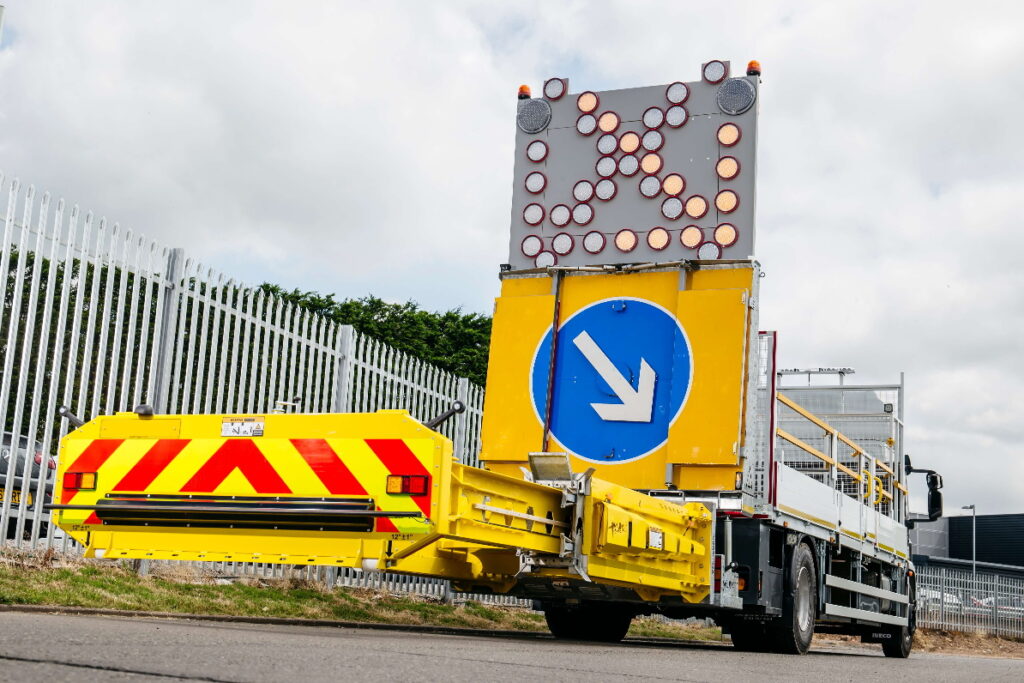
Truck mounted attenuators are primarily bought by road construction contractors, highway maintenance companies, and government transportation agencies. These organizations deploy TMAs to protect work zone crews and road users from rear-end collisions in active traffic environments. The sections below unpack the specific industries, procurement structures, compliance requirements, and purchasing considerations that shape the TMA market.
What industries have the highest demand for truck mounted attenuators?
The highest demand for truck mounted attenuators comes from highway construction, road maintenance, and traffic management sectors. Any industry that positions vehicles in live traffic lanes needs rear-impact crash protection, making TMAs a standard piece of equipment for work zone operations across both public and private sectors.
The most active buyers typically fall into these categories:
- Highway construction companies that manage long-term infrastructure projects on high-speed roads and motorways
- Road maintenance contractors performing resurfacing, lane marking, pothole repair, and utility work in active traffic
- Municipal transportation departments responsible for ongoing street and road upkeep within city limits
- Civil engineering firms overseeing bridge, tunnel, and major infrastructure projects adjacent to traffic flow
- Utility and telecom contractors working in or near roadways for underground cabling, drainage, or pipework
Demand is highest in markets with strict work zone safety legislation, particularly the United States and Western Europe, where regulatory frameworks require certified crash protection on public roads. Projects on high-speed corridors such as motorways and interstate highways generate the most consistent TMA demand because the risk of high-speed rear-end impacts is greatest.
Do government agencies buy TMAs directly or through contractors?
Government agencies acquire truck mounted attenuators through both direct procurement and contractor supply, depending on the project model. When agencies manage road maintenance with in-house crews, they purchase TMAs directly. When they outsource construction or maintenance projects, the contracted company is typically responsible for supplying compliant safety equipment, including TMAs.
In practice, the contractor-supply model is more common for large infrastructure projects. A government transportation department issues a tender specifying safety standards and work zone requirements. The winning contractor then sources equipment that meets those specifications, which means contractors are often the end buyers even when public funding drives the purchase.
Some government agencies also maintain their own fleet of safety vehicles for routine maintenance work, in which case they procure TMAs directly and manage them through their own asset systems. In the Netherlands, for example, Rijkswaterstaat operates significant in-house traffic management capacity alongside its contractor network.
What safety standards do TMA buyers need to comply with?
TMA buyers need to comply with the crash testing standards applicable in their region. In the United States, the two most relevant standards are NCHRP-350 TL-3 and MASH 2016 (Manual for Assessing Safety Hardware). MASH 2016 is the current standard, and the Federal Highway Administration (FHWA) requires MASH-compliant devices for federally funded projects. In Europe, EN 1317 governs crash cushion performance on public roads.
Buyers working on federally funded US projects should confirm that any TMA they purchase holds an FHWA acceptance letter under MASH 2016. This documentation confirms the device has passed the required crash tests and is eligible for use on federal-aid highways. Using a non-compliant device on such projects can result in project delays, liability exposure, and contract penalties.
Beyond crash testing, buyers also need to consider:
- Local road authority approvals, which may require additional documentation beyond the base standard
- Truck compatibility requirements, since TMAs are rated for specific vehicle weight classes (such as 70K or 100K lb)
- Visibility and signage regulations, which often require integrated arrow boards or VMS displays on shadow vehicles
What should buyers look for when choosing a truck mounted attenuator?
When choosing a truck mounted attenuator, buyers should prioritize crash test certification, compatibility with their truck fleet, and the availability of integrated signage options. The right TMA depends on the speed environment, vehicle weight class, and the specific work zone setup the buyer operates in.
Key factors to evaluate include:
- Certification level: Confirm the TMA holds MASH 2016 or NCHRP-350 TL-3 approval for your region and project type
- Truck weight class: Match the TMA rating (e.g. 70K or 100K lb) to your host vehicle’s gross vehicle weight
- Mounting system: Assess whether a standard hitch mount or a more robust truck-specific mount suits your operational setup
- Integrated accessories: Arrow boards, full-color VMS displays, and hydraulic LED-lift masts increase visibility and reduce the number of separate vehicles needed in the work zone
- Durability and repairability: Consider how quickly damaged components can be replaced after an impact, since downtime costs money
- Supplier support: Evaluate whether the manufacturer offers technical documentation, spare parts, and after-sales service in your market
Buyers operating across multiple regions should also check whether a single TMA model holds approvals in all relevant markets, which simplifies fleet standardization and compliance management.
How do rental companies factor into the TMA market?
Rental companies are significant buyers of truck mounted attenuators because they supply TMAs to contractors who need short-term access to certified crash protection without a capital purchase. For smaller contractors or companies entering new markets, renting a TMA is often more practical than buying one outright.
This creates a two-tier purchasing structure in the TMA market. Rental fleet operators buy TMAs in volume to service regional demand, while end-user contractors rent from them project by project. Rental companies therefore need TMAs that are durable enough to withstand repeated use, easy to maintain after impacts, and certified to the standards their customers require.
For manufacturers, rental companies represent a stable, high-volume customer segment. For contractors, rental access lowers the barrier to compliance, particularly for occasional roadwork or emergency maintenance where owning a TMA outright is not cost-effective.
How Verdegro Helps with Truck Mounted Attenuators
We manufacture a range of truck mounted attenuator systems designed for road construction contractors and traffic management operators worldwide. Our TMA lineup includes the TMA-US 100K, TTMA-US 100K, LTMA-US 70K, and BLADE TMA, each tested and approved to NCHRP-350 TL-3 and MASH 2016 standards. We also hold multiple FHWA acceptance letters, so you can deploy our systems on federally funded US projects with confidence.
Here is what you get when you work with us:
- MASH 2016 certified systems that meet the most current US federal standard for work zone crash protection
- Multiple weight class options (70K and 100K lb) to match your host vehicle specifications
- Integrated accessories including LED arrow boards, full-color VMS displays, and hydraulic LED-lift masts to maximize work zone visibility
- Mobilityplanner platform access for real-time GPS tracking, status monitoring, and remote control of your deployed equipment
- Global compliance support with documentation suited to both US and European regulatory environments
Whether you are a contractor building out your safety fleet, a government agency procuring directly, or a rental company looking for durable high-volume stock, we have a system that fits your operation. Contact us to discuss your requirements and find the right TMA for your work zone setup.
Related Articles
- What is the story behind the Armadillo truck mounted attenuator?
- How can impact protection be integrated into an existing maintenance fleet?
- Is it cheaper to repair or replace a damaged truck mounted attenuator?
- Why do truck mounted attenuator standards differ between the US and Europe?
- Is NCHRP-350 still valid or has it been replaced by MASH for truck mounted attenuators?