
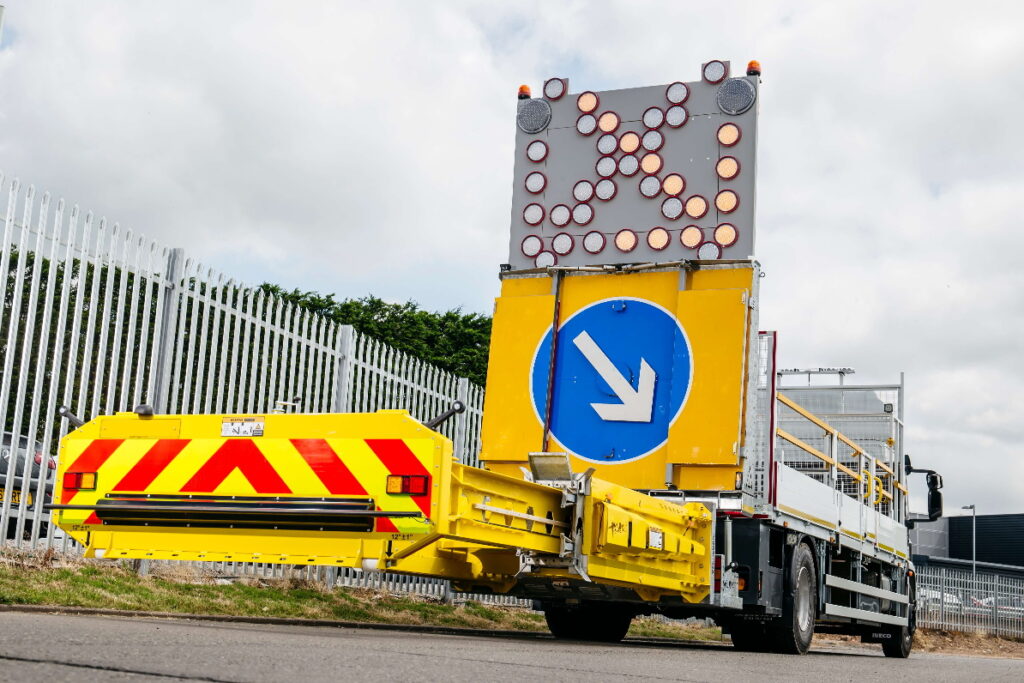
In most cases, repairing a damaged truck mounted attenuator is cheaper than replacing it, but only when the structural frame and core components are intact. If impact damage extends to the mounting system, internal hydraulics, or the attenuator’s certified crash structure, replacement often costs less in the long run than a repair that may not restore full safety performance. The sections below walk through the key factors that determine which option makes financial and operational sense.
What factors determine whether a TMA can be repaired?
Whether a truck mounted attenuator can be repaired depends primarily on the extent and location of the damage. Surface-level damage to panels, lighting components, or mounting brackets is generally repairable. Damage to the core energy-absorbing cartridges, the main frame, or the hydraulic mounting system raises more serious concerns about whether repair will restore the unit to its original crash performance standard.
Key factors to assess include:
- Frame integrity: Bent or cracked structural members often cannot be restored to original tolerances without compromising the unit’s crash absorption behavior.
- Cartridge condition: Many TMA designs use replaceable energy-absorbing cartridges. If only the cartridges are damaged, replacement of those components alone may be sufficient.
- Mounting system: The hydraulic or mechanical mounting system transfers impact loads to the host vehicle. Damage here affects not just the attenuator but the truck itself.
- Certification status: Some manufacturers void certification after an impact above a certain threshold, regardless of visible damage. Always check the original manufacturer’s guidance.
- Impact severity: A low-speed rear tap is very different from a full-speed MASH TL-3 level impact. The more severe the hit, the more likely replacement becomes the safer and more economical choice.
A qualified inspector or the original manufacturer should assess the unit before any repair decision is made. Guessing based on visual inspection alone is not reliable for safety-rated crash equipment.
How much does it cost to repair a truck mounted attenuator?
Repair costs for a truck mounted attenuator vary widely depending on what is damaged, but minor repairs typically range from a few hundred to a few thousand dollars, while major structural repairs can approach or exceed half the cost of a new unit. The specific cost depends on parts availability, labor rates, and whether the unit needs recertification after repair.
Typical repair cost categories include:
- Panel and housing replacement: Generally low cost, often under a few hundred dollars in parts plus labor.
- Energy-absorbing cartridge replacement: Moderate cost, but often the most common repair after an impact. Cartridge prices vary by model and manufacturer.
- Lighting and arrow board repairs: LED components and wiring are usually straightforward to replace, though costs increase if the control system is damaged.
- Hydraulic system repairs: Cylinders, hoses, and valves carry higher parts and labor costs, and may require specialist technicians.
- Frame or structural repair: This is where costs escalate quickly. Welding, realignment, and post-repair testing can push total repair costs close to replacement value.
Always request a full damage assessment before committing to repair. A repair quote that grows significantly once work begins is a common problem with structurally compromised units.
When does replacing a truck mounted attenuator cost less than repairing it?
Replacement becomes the more cost-effective option when repair costs exceed roughly 50 to 60 percent of the replacement price, or when the repair cannot restore the unit to its certified performance level. At that point, you are spending significant money on a unit that may still underperform in a real impact.
Replacement makes more financial sense in these situations:
- The frame or core structure is bent, cracked, or deformed beyond manufacturer tolerances
- The unit is an older model and replacement parts are no longer available or are very expensive
- The repair requires recertification testing, which adds substantial cost and time
- The host truck also sustained damage, making a full system review more practical
- The unit has been impacted multiple times and has accumulated wear beyond what any single repair addresses
- A newer model offers improved compliance, such as MASH 2016 certification, which may be required for new contracts or government tenders
Factor in downtime costs as well. A lengthy repair process that keeps a work truck off the road has a real operational cost that a faster replacement may offset.
Does repairing a TMA affect its MASH compliance and certification?
Yes, repairing a truck mounted attenuator can affect its MASH compliance if the repair alters the certified crash structure or uses non-approved components. MASH (Manual for Assessing Safety Hardware) certification applies to a specific design configuration. Any modification that deviates from the tested configuration may invalidate the original acceptance.
This matters practically because many government contracts and highway projects in the United States require certified crash protection systems with valid FHWA acceptance letters. A repaired unit that no longer meets its original specification may not qualify for use on those projects, even if it looks structurally sound.
To protect certification status after a repair:
- Use only manufacturer-approved replacement parts
- Follow the manufacturer’s repair procedures exactly
- Request written confirmation from the manufacturer that the repair restores the unit to its certified configuration
- Check whether the FHWA acceptance letter for your specific model includes any post-impact repair guidance
If the manufacturer cannot confirm that the repaired unit meets its original tested configuration, treat it as non-compliant until further guidance is obtained.
What should you check before making a repair-or-replace decision?
Before committing to either option, complete a structured assessment covering safety, cost, compliance, and operational impact. Rushing this decision based on upfront repair quotes alone often leads to higher total costs or compromised safety performance.
Work through these checks before deciding:
- Get a manufacturer assessment: Contact the original manufacturer with photos and a description of the impact. They can advise whether the unit is repairable to its certified standard.
- Review your compliance requirements: Confirm what certification standard your contracts or jurisdiction require. If MASH 2016 compliance is now mandatory and your unit is certified only to an older standard, replacement may be the right move regardless of repair cost.
- Compare total cost of ownership: Include parts, labor, downtime, recertification, and the remaining service life of the repaired unit versus a new one.
- Check parts availability: Older models may have limited parts supply. Long lead times on parts extend downtime and can make repair less practical.
- Assess the host vehicle: If the truck itself was damaged in the same impact, a combined assessment may change the economics of the decision.
- Consider operational timing: If you have an active project with tight deadlines, a faster replacement may be worth a higher upfront cost compared to a multi-week repair process.
How Verdegro Supports Your Repair-or-Replace Decision
We manufacture a range of truck mounted attenuators built and tested to current crash safety standards, including MASH 2016 and NCHRP 350 TL-3. Our product line includes the TMA-US 100K, TTMA-US 100K, LTMA-US 70K, and BLADE TMA, and we hold multiple FHWA acceptance letters to support compliance on government and highway projects.
When you are evaluating whether to repair or replace a damaged unit, we can help you with:
- Post-impact assessment guidance to determine whether your current unit can be restored to its certified configuration
- Replacement unit specifications matched to your truck class and operational requirements
- Compliance documentation including FHWA acceptance letters and MASH test reports for our current product range
- Optional accessories such as LED arrow boards, full-color VMS displays, and hydraulic LED-lift masts if you are upgrading at the same time
If you are working through a repair-or-replace decision and want direct input on the options available, contact us and we will help you find the most practical and compliant path forward.
Related Articles
- What equipment makes a roadwork vehicle more versatile?
- How are road workers protected when closing a traffic lane?
- What is a trailer light truck mounted attenuator and when is it used?
- What should a driver do after hitting a truck mounted attenuator?
- What is the most popular truck mounted attenuator model for highway work?