
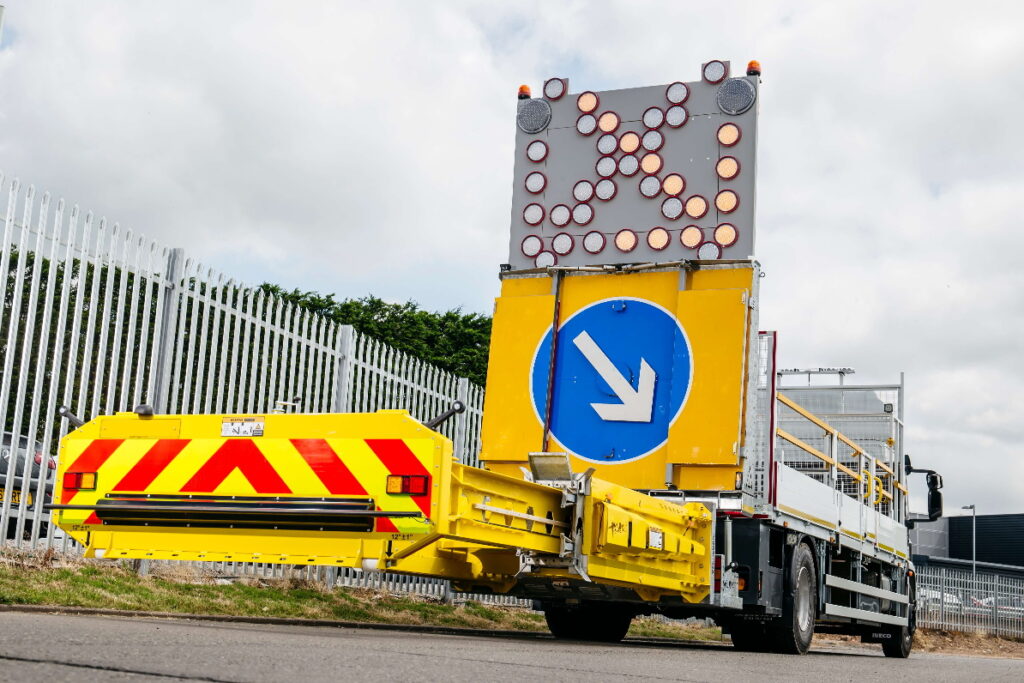
Yes, truck mounted attenuator prices vary by both weight class and the safety standard they are tested to, and these two factors often interact to create significant price differences between models. Heavier, higher-rated systems built to the most current standards like MASH 2016 consistently cost more than lighter, older-standard alternatives. Understanding what drives those differences helps you make a better purchasing decision, so the sections below unpack each factor in detail.
What factors actually drive truck mounted attenuator costs?
The purchase price of a truck mounted attenuator is shaped by a combination of weight class, safety certification, deployment mechanism, and optional accessories. No single factor determines the final cost in isolation. Instead, each variable adds or removes cost depending on your specific operational requirements and the regulations you need to comply with.
The most important cost drivers are:
- Weight class and size – heavier-duty systems require more robust materials and engineering
- Safety standard certification – MASH 2016-tested systems involve more rigorous testing and design investment than older NCHRP-350 units
- Deployment type – manual systems cost less upfront than hydraulic versions
- Integrated accessories – arrow boards, VMS displays, and LED lift masts add to the base price
- Supply chain and lead times – custom configurations or international shipping can affect total cost
Knowing which of these factors matter most for your work zone setup lets you compare quotes meaningfully rather than on price alone.
Does TMA weight class affect the purchase price?
Yes, TMA weight class directly affects purchase price. Heavier systems are built to absorb greater impact energy, which requires stronger structural components, more material, and more complex engineering. A system rated for a heavier host vehicle will generally carry a higher price tag than a lighter-class equivalent tested under the same standard.
Weight class also determines which host vehicles a TMA can be mounted to, which in turn affects your total fleet investment. A lighter TMA like a 70K-class unit pairs with smaller trucks, while a 100K-class system is designed for heavier host vehicles. The higher the class, the more demanding the crash test requirements, and the more engineering work goes into meeting them.
It is worth noting that the cost difference between weight classes is not always dramatic. In some cases, the gap between a 70K and 100K system is smaller than the gap created by choosing a hydraulic deployment option or adding integrated accessories. Always evaluate weight class in context with your other requirements before assuming it is the dominant cost factor.
How does MASH compliance change what a TMA costs?
MASH 2016 compliance adds to the cost of a truck mounted attenuator because it requires more rigorous crash testing, updated design geometry, and higher performance thresholds than the older NCHRP-350 standard. Manufacturers invest significantly more in development and testing to achieve MASH acceptance, and that investment is reflected in the product price.
The practical implication is that a MASH 2016-tested TMA and an NCHRP-350-tested TMA may look similar on the surface but differ considerably in price. For buyers operating in the United States, the Federal Highway Administration (FHWA) now requires MASH-compliant products on federally funded projects, which means choosing a cheaper, older-standard system could disqualify you from certain contracts.
From a total cost perspective, MASH compliance is a sound investment. The cost premium over legacy-standard systems is offset by broader contract eligibility, reduced liability exposure, and the assurance that the system has passed the most current and demanding safety benchmarks available.
What’s the difference between manual and hydraulic TMA deployment costs?
Manual TMA systems cost less upfront than hydraulic systems, but hydraulic deployment adds operational efficiency that can offset the price difference over time. A manual system requires crew members to physically lower and raise the attenuator, while a hydraulic system allows the operator to deploy and retract it from the cab, reducing setup time and physical labor.
Here is a straightforward comparison of the two deployment types:
- Manual TMAs – lower purchase price, simpler mechanics, lower maintenance cost, requires more crew time per deployment
- Hydraulic TMAs – higher purchase price, faster deployment, reduces physical strain on crew, better suited for high-frequency or time-sensitive work zones
For operations where the TMA is deployed and retrieved multiple times per day, the labor savings from a hydraulic system can justify the higher initial cost relatively quickly. For lower-frequency applications, a manual system may be the more practical choice.
Are there hidden costs when buying a truck mounted attenuator?
Yes, there are several costs beyond the purchase price that buyers often overlook when budgeting for a truck mounted attenuator. The sticker price covers the unit itself, but the total cost of ownership includes installation, maintenance, replacement parts, operator training, and any accessories needed to meet local regulatory requirements.
Common additional costs to account for include:
- Mounting and installation – fitting the TMA to your specific host vehicle may require custom brackets or modifications
- Arrow boards and signage – many work zone regulations require visible warning systems that are not always included in the base price
- Maintenance and inspection – TMAs that have absorbed an impact must be inspected and potentially replaced or repaired before returning to service
- Operator training – particularly relevant for hydraulic systems where incorrect operation can create safety risks
- Compliance documentation – FHWA acceptance letters and test reports may be required for project approval, and not all suppliers provide these as standard
Factoring in these costs from the start gives you a more accurate picture of what you are actually spending and helps you compare competing products on equal terms.
How Verdegro Helps You Choose the Right TMA
We manufacture a range of truck mounted attenuator systems designed to meet the demands of road construction contractors and traffic management operators working under current safety standards. Our TMA lineup includes the TMA-US 100K, TTMA-US 100K, LTMA-US 70K, and BLADE TMA, all tested and approved to NCHRP-350 TL-3 and MASH 2016. Each system comes with FHWA acceptance letters, so you have the documentation you need for federally funded projects without having to chase it separately.
Here is what we offer to help you make the right decision:
- Multiple weight class options – choose the system that matches your host vehicle and operational requirements
- Manual and hydraulic configurations – we supply both deployment types so you can match your budget and workflow
- Integrated accessories – LED arrow boards, full-color VMS displays, and hydraulic LED lift masts are available to build a complete work zone solution
- Clear compliance documentation – MASH 2016 acceptance letters are included, removing compliance uncertainty from your procurement process
- Mobilityplanner platform – our web-based platform gives you real-time status updates, GPS tracking, and remote control capabilities across your deployed equipment
If you want to discuss which TMA configuration fits your specific requirements, contact our team and we will help you find the right system for your work zone setup.
Related Articles
- What impact protection options are available for different roadwork vehicles?
- Should you use a van or truck for roadwork protection?
- What should a driver do after hitting a truck mounted attenuator?
- Why do trucks have truck mounted attenuators attached?
- When is a truck mounted attenuator required at a roadwork site?