
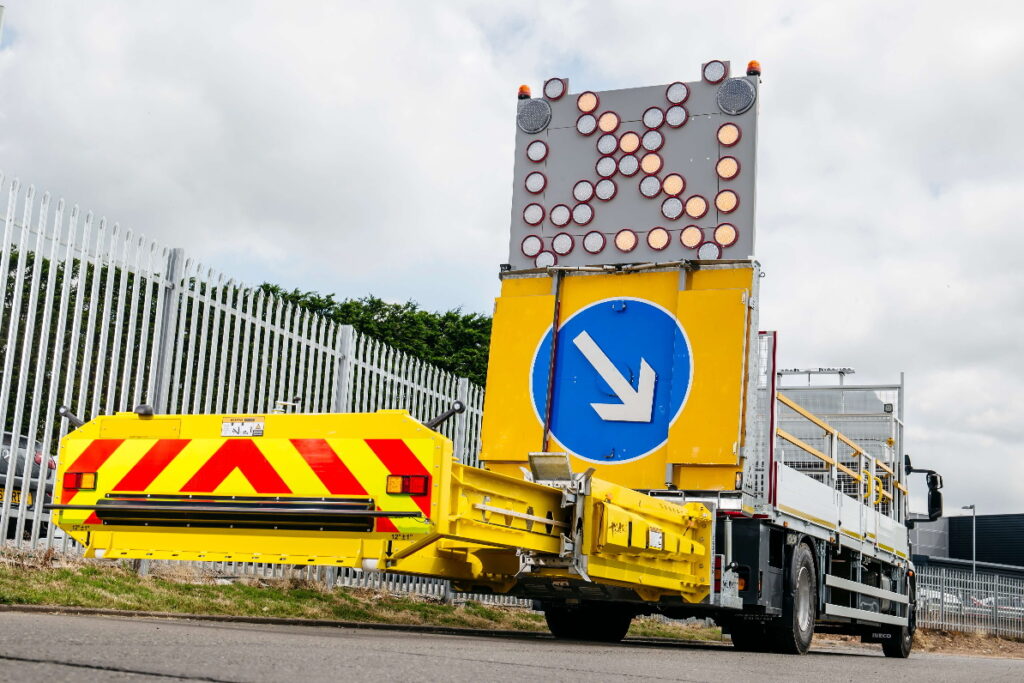
Most European countries do not yet mandate CEN/TS 16786 certification for truck mounted attenuators by law, but the standard is increasingly referenced in public procurement specifications and work zone safety regulations across the EU. Countries including the Netherlands, Germany, Belgium, and the United Kingdom (pre-Brexit adoption) have incorporated or actively reference the standard in tender requirements and national guidelines. The sections below break down which countries apply it, what the standard demands, and how you can verify compliance before purchasing a TMA.
Which European countries enforce CEN/TS 16786 for TMAs?
No single European country enforces CEN/TS 16786 as a binding legal requirement across all work zones, but several countries treat it as the benchmark specification in public contracts and road authority guidelines. The Netherlands, Germany, Belgium, Sweden, and Denmark are among the most active adopters, typically requiring CEN/TS 16786 compliance in government tenders for highway maintenance and construction projects.
In practice, enforcement happens at the procurement level rather than through traffic law. When a national road authority or municipality issues a tender for work zone equipment, the specification sheet will often reference CEN/TS 16786 as the minimum accepted crash test standard for truck mounted attenuators. If your TMA does not meet it, your bid is disqualified regardless of other qualifications.
The United Kingdom adopted the standard before Brexit and continues to reference it in Highways England (now National Highways) guidance. Ireland, France, and Switzerland also reference the standard to varying degrees through their respective road safety agencies. As of 2026, adoption continues to expand as more national road authorities update their procurement frameworks to align with European safety standards.
What does CEN/TS 16786 actually require for truck mounted attenuators?
CEN/TS 16786 is a European technical specification that defines the crash test performance requirements for truck mounted attenuators used in road work zones. It specifies how a TMA must absorb and redirect impact energy when struck by an errant vehicle, and sets out test conditions, performance categories, and documentation requirements manufacturers must meet.
The standard defines performance in terms of impact speed and vehicle mass. A TMA tested under CEN/TS 16786 must demonstrate that it can protect both the work truck occupants and the impacting vehicle’s occupants within defined injury thresholds. Key requirements include:
- Crash test categories based on impact speed, typically ranging from 50 km/h to 110 km/h depending on the intended deployment environment
- Vehicle intrusion limits that define how far the impacting vehicle can penetrate the work truck’s protected zone
- Occupant risk criteria measured through dummy instrumentation during crash tests, assessing head injury, chest deceleration, and femur load
- Deflection and rebound criteria to ensure the TMA does not create secondary hazards after impact
- Documentation and marking requirements including a Declaration of Performance and CE marking where applicable
Manufacturers must conduct these tests at an accredited testing facility and produce a full test report. That report forms the basis of procurement verification and must be available to clients on request.
Is CEN/TS 16786 the same as MASH 16 certification?
CEN/TS 16786 and MASH 16 (Manual for Assessing Safety Hardware, 2016 edition) are not the same standard, but they share the same underlying goal: verifying that a truck mounted attenuator performs safely in a controlled crash scenario. The key difference is jurisdiction and test methodology.
MASH 16 is the current US standard developed by AASHTO and FHWA. It governs crash testing for roadside safety hardware in the United States and is required for FHWA acceptance. CEN/TS 16786 is the European equivalent, developed by the European Committee for Standardization (CEN) specifically for the EU market.
The two standards differ in test vehicle specifications, impact angles, performance thresholds, and documentation frameworks. A TMA that holds FHWA acceptance letters under MASH 16 does not automatically satisfy CEN/TS 16786 requirements, and vice versa. If you operate in both markets, you need to verify that your TMA holds certification under the relevant standard for each region.
That said, a TMA designed and tested to both standards offers the broadest international compliance coverage, which is relevant for contractors working across North America and Europe on multinational infrastructure projects.
What happens if a TMA is deployed without the required certification?
Deploying a non-certified truck mounted attenuator in a jurisdiction that requires CEN/TS 16786 compliance exposes contractors to serious legal, financial, and safety consequences. The specific outcome depends on how the requirement is embedded in local law or contract terms, but the risks follow a predictable pattern.
On public contracts, using a non-compliant TMA typically constitutes a breach of contract. This can result in project suspension, financial penalties, or disqualification from future tenders. Road authorities in the Netherlands and Germany, for example, conduct equipment audits on active work zones, and non-compliant equipment can be ordered off-site immediately.
Beyond contract risk, liability exposure is significant. If an incident occurs in a work zone where a non-certified TMA was deployed, the contractor may face civil liability for damages on the grounds that they failed to meet the applicable safety standard. Insurance policies tied to work zone operations often require compliant equipment as a condition of coverage, meaning a claim could be denied if certification was absent.
The practical takeaway is straightforward: always confirm the certification requirements in your project specifications before procuring a TMA, and request the test report documentation from the manufacturer before signing any contract.
How do contractors verify a TMA meets CEN/TS 16786 before procurement?
To verify that a truck mounted attenuator meets CEN/TS 16786, you should request the full crash test report from the manufacturer, confirm the testing was conducted at an accredited facility, and check that the report matches the specific TMA model and configuration you intend to deploy.
Follow these steps during your procurement process:
- Request the Declaration of Performance (DoP) from the manufacturer. This document confirms the product has been tested and declares its performance characteristics under CEN/TS 16786.
- Ask for the full crash test report, not just a summary. The report should identify the testing body, test date, vehicle specifications, and outcome measurements for each criterion.
- Confirm the accreditation of the test facility. Testing must be conducted at a facility accredited under EN ISO/IEC 17025 or equivalent national accreditation.
- Match the certified configuration to your deployment. Certification applies to a specific TMA model at a specific weight class and mounting configuration. If you change the host vehicle or add accessories that alter the system’s mass, re-verification may be required.
- Check for CE marking where applicable, as this signals that the product has gone through the required conformity assessment process for the European market.
- Consult your project’s technical specification. Some tenders specify a minimum performance category under CEN/TS 16786 (for example, a specific impact speed class). Confirm the TMA’s certified category matches or exceeds what is required.
If a manufacturer cannot provide a full test report or deflects questions about accreditation, treat that as a red flag. Legitimate certification leaves a clear, auditable paper trail.
How Verdegro Supports Your CEN/TS 16786 Compliance
We manufacture a range of truck mounted attenuator systems tested and approved to internationally recognized crash safety standards, including MASH 2016 and NCHRP-350 TL-3. Our TMA range includes the TMA-US 100K, TTMA-US 100K, LTMA-US 70K, and BLADE TMA, each designed to protect road workers and drivers in active work zones.
When you work with us, you get full documentation support as part of the procurement process. Here is what we provide:
- Complete crash test reports for each TMA model, available on request
- FHWA acceptance letters under MASH 16, the most current US standard
- Technical guidance on matching the right TMA model to your deployment requirements and host vehicle configuration
- Optional accessories including LED arrow boards, full-color VMS displays, and hydraulic LED-lift masts that integrate with our certified TMA systems
If you are preparing a tender submission or evaluating TMA options for an upcoming project, we can help you confirm which system fits your compliance requirements. Contact us to request documentation or speak with our team about your specific work zone safety needs.
Related Articles
- How are road workers protected when closing a traffic lane?
- What happens if a vehicle crashes into a truck mounted attenuator?
- What should you look for when getting a truck mounted attenuator quote?
- What is the difference between MASH and CEN/TS 16786 for truck mounted attenuators?
- What is the MASH standard for truck mounted attenuators?