
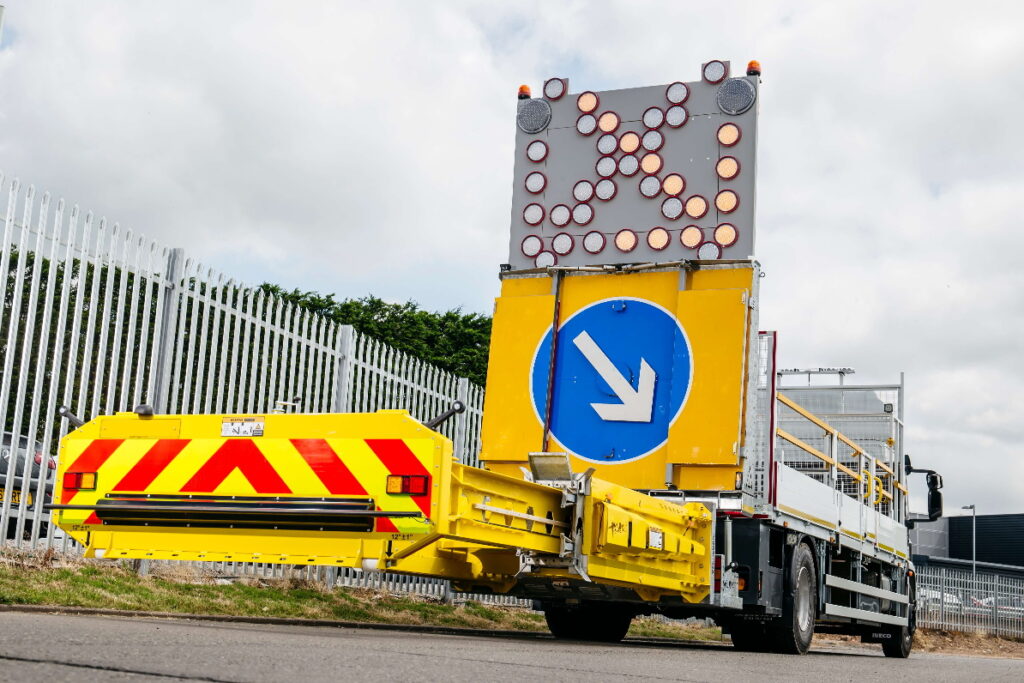
The price of a truck mounted attenuator depends primarily on its crash test certification level, mounting configuration, and the optional features you add. For most buyers, the MASH rating and whether the unit is hydraulically or manually mounted have the biggest impact on the final cost. Understanding each pricing factor helps you make a more informed procurement decision, whether you are buying a single unit or outfitting an entire fleet.
What MASH rating level affects TMA pricing the most?
The MASH rating level is one of the strongest drivers of TMA price. Units certified to MASH 2016, the most current standard, cost more than older NCHRP-350-certified models because they must meet stricter crash test requirements, use more advanced materials, and undergo more rigorous testing and documentation before receiving acceptance. For work zones on federal or state-funded highways in the US, MASH 2016 compliance is increasingly required, so the investment is often non-negotiable.
Within the MASH framework, Test Level 3 (TL-3) is the benchmark for most highway applications. TL-3-rated attenuators are designed to absorb the impact of a vehicle traveling at highway speeds, which demands a more robust structural design compared to lower test levels used in slower-speed environments. That engineering complexity translates directly into higher manufacturing costs and, therefore, a higher purchase price.
When evaluating certification costs, also factor in the long-term value. A MASH 2016-certified unit keeps you compliant with current and emerging regulations, reducing the risk of costly contract disputes or equipment rejections on job sites.
How does TMA mounting configuration affect the overall cost?
The mounting configuration significantly affects the price of a truck mounted attenuator. Hydraulic mounting systems, which allow operators to raise and lower the attenuator at the push of a button, cost considerably more than manual or fixed-mount alternatives. The hydraulic components, including the pump, cylinders, and control system, add both material cost and engineering complexity to the unit.
Manual mounting configurations are simpler and less expensive upfront, but they require more physical effort from operators and can slow deployment in time-sensitive situations. For high-frequency deployments or operations where speed and ease of use matter, the higher cost of a hydraulic system often pays for itself in reduced labor time and operator fatigue.
You should also consider the host vehicle compatibility. Some mounting systems are designed for specific truck weight classes, such as 70,000 lb or 100,000 lb GVW ratings, and matching the attenuator to the correct vehicle class affects both safety performance and cost. A mismatch can require additional mounting hardware or structural reinforcement, adding to the total price.
What optional features drive up the price of a truck mounted attenuator?
Optional features can add a significant amount to the base price of a truck mounted attenuator, depending on what your operation requires. The most common cost-adding options include LED arrow boards, full-color Variable Message Sign (VMS) displays, and hydraulic LED-lift masts. Each of these serves a specific traffic management function, but each represents a meaningful addition to the unit’s overall cost.
- LED arrow boards: These improve visibility and directional signaling for approaching drivers. The size, brightness rating, and number of display modes affect the price.
- Full-color VMS displays: These allow operators to display dynamic messages and warnings to road users. Full-color capability and remote programmability push costs higher than single-color alternatives.
- Hydraulic LED-lift masts: These elevate lighting or signage to improve visibility over traffic and barriers. The hydraulic mechanism and integrated LED lighting add both material and installation costs.
- Remote monitoring and GPS: Connectivity features that allow real-time tracking and status updates require additional hardware and software integration.
Before adding options, evaluate which features are required by the contract or job specification and which are genuinely useful for your specific deployment environment. Not every job site needs a full-color VMS, and choosing the right combination of features avoids unnecessary cost.
Does buying new versus used change what you pay for a TMA?
Yes, buying used truck mounted attenuators typically costs less upfront, but the total cost picture is more complicated. Used units may carry a lower purchase price, but they can come with hidden costs in the form of worn components, outdated certifications, and limited or no manufacturer warranty. If a used unit does not carry a current MASH 2016 acceptance letter, it may not meet the compliance requirements for your project, making the lower price irrelevant.
New units give you a known service history, current certification documentation, and access to manufacturer support and parts. For organizations operating in regulated environments or on government contracts with strict equipment specifications, buying new is often the lower-risk and more cost-effective choice over the life of the equipment.
If you do consider used equipment, inspect the attenuator’s crash-absorbing cartridges or foam elements carefully. These components are designed to deform on impact and may need replacement even if the unit has only been involved in a minor collision. Replacement parts and recertification can quickly close the price gap between new and used.
How do fleet size and order volume influence TMA unit pricing?
Fleet size and order volume directly affect the per-unit price of truck mounted attenuators. Manufacturers and distributors typically offer volume pricing for larger orders, meaning the unit cost decreases as the quantity increases. This is relevant for highway construction companies, road maintenance contractors, and government agencies that need to equip multiple vehicles at once.
Larger orders also create leverage in negotiating lead times, delivery schedules, and after-sales support agreements. A fleet procurement gives you more room to negotiate favorable warranty terms or training packages that would not be available on a single-unit purchase.
For organizations that manage equipment across multiple regions or contracts, consolidating purchases into a single order rather than buying units individually over time can produce meaningful savings. Planning your fleet requirements a year in advance, particularly in 2026 when infrastructure project activity remains high in many markets, positions you to take full advantage of volume pricing structures.
How Verdegro Supports Your TMA Procurement
We manufacture a range of truck mounted attenuators certified to both NCHRP-350 TL-3 and MASH 2016 standards, including the TMA-US 100K, TTMA-US 100K, LTMA-US 70K, and BLADE TMA. Each model is engineered to match specific host vehicle weight classes and deployment needs, so you get a unit that fits your operation rather than a one-size-fits-all solution.
When you work with us, you can configure your attenuator with the options that genuinely serve your job site requirements:
- LED arrow boards in multiple display configurations
- Full-color VMS displays for dynamic message delivery
- Hydraulic LED-lift masts for elevated visibility
- Remote monitoring and GPS tracking through our Mobilityplanner platform
We also support fleet procurement for contractors and government agencies, with volume pricing available for larger orders. Our FHWA acceptance letters under MASH 2016 mean you receive documentation that holds up on federally funded projects without additional compliance steps on your end.
If you want to discuss your specific requirements, compare configurations, or get a quote for a single unit or full fleet, contact our team and we will help you find the right solution at the right price point.
Related Articles
- What impact protection is suitable for short-duration road maintenance?
- What are signs that a truck mounted attenuator needs to be replaced?
- How far behind a work zone should a truck mounted attenuator be positioned?
- Why do trucks have truck mounted attenuators attached?
- How does a truck mounted attenuator work?