
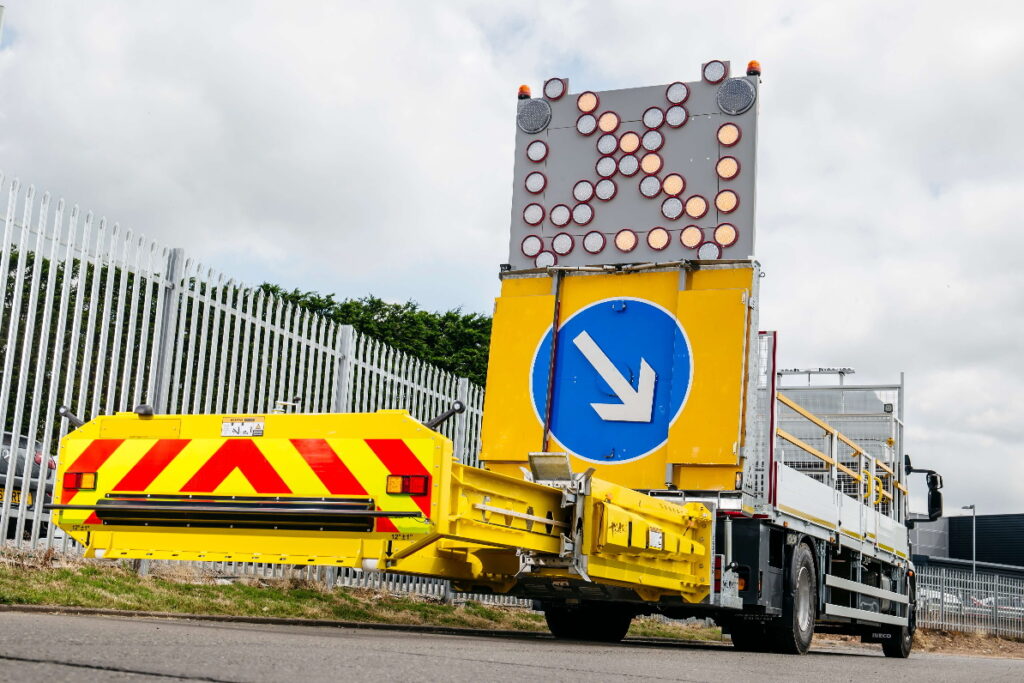
The United States currently has the most defined requirement for MASH-certified truck mounted attenuators, with the Federal Highway Administration (FHWA) mandating MASH 2016 compliance for all new TMA purchases on federally funded projects as of 2020. Several other countries reference MASH or equivalent standards, though requirements vary significantly by region. The sections below break down exactly where MASH applies, what it demands, and how it compares to other standards in use worldwide.
Which countries have adopted MASH as their TMA standard?
The United States is the primary country with a formal federal mandate for MASH-certified truck mounted attenuators. The FHWA requires that all new roadside safety hardware, including TMAs, purchased for federally funded highway projects must meet MASH 2016, the most current version of the Manual for Assessing Safety Hardware. Canada has also moved toward MASH adoption, with the Canadian Council of Motor Transport Administrators aligning its guidance with the MASH framework. Australia and New Zealand reference MASH in their road safety device evaluations, though their own standards (MASH ANZ) adapt the core protocols to local conditions.
Outside North America and the Pacific region, MASH is not a direct regulatory requirement. However, international contractors and procurement agencies increasingly treat MASH acceptance as a quality benchmark when evaluating crash protection equipment, even in markets where no formal MASH mandate exists.
What does MASH certification actually require for a TMA?
MASH certification requires a truck mounted attenuator to pass a series of full-scale crash tests that simulate real-world impact scenarios at defined speeds and angles. The tests evaluate how the TMA absorbs and redirects crash energy to protect both the occupants of an errant vehicle and the workers behind the host truck. MASH 2016 sets stricter occupant risk criteria and updated vehicle specifications compared to its predecessor, NCHRP 350.
For a TMA to receive FHWA acceptance under MASH, the manufacturer must submit test reports from an accredited crash test facility demonstrating that the device meets all relevant Test Level criteria, typically Test Level 3 (TL-3) for highway work zones. The FHWA then issues an acceptance letter confirming the device qualifies for use on federally funded projects. Without this letter, a TMA cannot be specified or purchased for those projects, regardless of how well it may perform in practice.
Is NCHRP 350 still accepted anywhere, or has MASH replaced it?
NCHRP 350 has largely been replaced by MASH in the United States for new purchases, but devices previously accepted under NCHRP 350 were not automatically invalidated. The FHWA set a transition deadline of December 31, 2019, after which only MASH-compliant devices could be procured for federally funded projects. Existing NCHRP 350-accepted equipment already in service was permitted to remain in use.
In practice, this means contractors operating older fleets may still run NCHRP 350-tested TMAs on projects where federal funding is not involved. Some state and local agencies also maintain their own procurement rules, which may allow NCHRP 350 devices in specific contexts. However, for any new TMA acquisition tied to federal funding, MASH 2016 compliance is the only accepted standard in the US. In other countries, NCHRP 350 remains a recognized benchmark where MASH has not been formally adopted.
Do European countries require MASH or use a different standard?
European countries do not require MASH certification for truck mounted attenuators. Instead, the European Union applies the EN 1317 standard, which governs road restraint systems, including vehicle-arresting devices. TMAs in Europe are assessed under EN 1317-3 for crash cushions, with performance categories defined by impact severity and vehicle class. This is a fundamentally different testing framework from MASH, and a MASH acceptance letter does not automatically satisfy EN 1317 requirements, nor the reverse.
Individual European countries may layer additional national requirements on top of EN 1317, but the core standard remains consistent across EU member states. Contractors working across both North American and European markets therefore need to verify which standard applies to each specific project and jurisdiction, a TMA certified under one framework may not be legally deployable under the other without separate testing and documentation.
What happens if a contractor uses a non-MASH TMA on a regulated project?
Using a non-MASH truck mounted attenuator on a federally funded US project creates serious compliance and liability exposure. The FHWA can require the device to be removed from the project, which disrupts work zone operations and creates unplanned costs. The contracting agency may also face penalties or lose eligibility for federal reimbursement on affected work items.
Beyond the regulatory consequences, there is a direct safety implication. MASH 2016 sets higher performance thresholds than older standards, meaning a non-compliant TMA may not provide the level of crash protection that the project specification assumed. In the event of an incident involving a non-compliant device, contractors and agencies face significantly greater legal and financial risk. Verifying compliance before procurement, not after deployment, is the only reliable way to avoid these outcomes.
Is NCHRP 350 still accepted anywhere, or has MASH replaced it?
How can contractors verify that a TMA meets current MASH requirements?
Contractors can verify MASH compliance by requesting the FHWA acceptance letter directly from the TMA manufacturer. The FHWA publishes a regularly updated list of accepted devices on its website, organized by device category. Checking that list against the specific model and configuration you plan to deploy is the most direct way to confirm eligibility for federally funded projects.
When reviewing an acceptance letter, confirm the following:
- The standard cited is MASH 2016, not NCHRP 350 or an earlier MASH version
- The test level matches your project requirements (typically TL-3 for highway applications)
- The device configuration in the letter matches what you are actually deploying – accessories or modifications not covered in the original test may affect acceptance
- The acceptance letter has not been withdrawn or superseded by a newer version
If you are working on a non-US project, request the equivalent documentation for the applicable standard, EN 1317 test reports and CE marking for European projects, or MASH ANZ acceptance for Australia and New Zealand.
How Verdegro Supports Your TMA Compliance
We manufacture a range of truck mounted attenuator systems tested and accepted to both NCHRP 350 TL-3 and MASH 2016, including the TMA-US 100K, TTMA-US 100K, LTMA-US 70K, and BLADE TMA. Each model comes with full FHWA acceptance documentation, so you can verify compliance before procurement rather than during a project audit.
Here is what you get when you work with us:
- FHWA acceptance letters under MASH 2016 for applicable models, ready to submit with your project documentation
- Systems designed for road construction contractors and traffic management operators who need certified, durable crash protection in active work zones
- Optional accessories including LED arrow boards, full-color VMS displays, and hydraulic LED-lift masts, all integrated within the same tested configuration
- Support for international deployments, with experience across both MASH- and NCHRP 350-compliant projects
If you are specifying a TMA for an upcoming project and need to confirm which standard applies or which model fits your requirements, contact us directly and we will help you identify the right solution.
Related Articles
- What is TL-3 in truck mounted attenuator crash testing?
- What is inside a truck mounted attenuator?
- What is the difference between a truck mounted attenuator and a crash cushion?
- What are the advantages of a trailer-mounted attenuator?
- Can a damaged truck mounted attenuator be repaired or does it need replacing?