
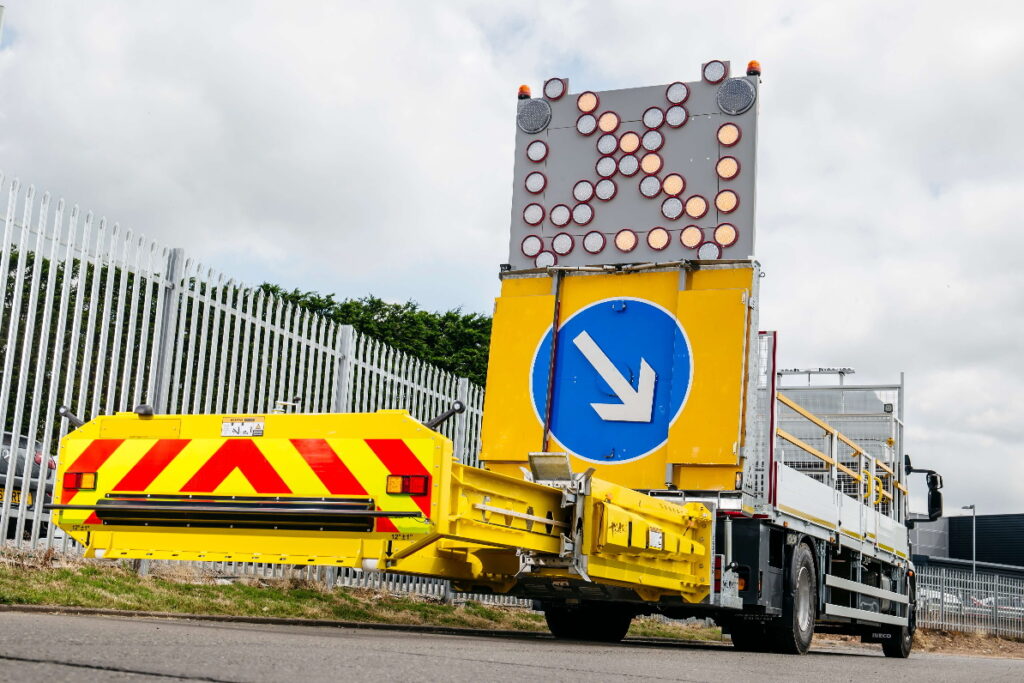
To maintain a truck mounted attenuator, you need to follow a structured routine that includes regular visual inspections, functional checks of all mechanical and hydraulic components, damage assessments after any impact event, and timely replacement of worn or compromised parts. Maintenance keeps the system performing as designed and ensures it meets the safety standards required for active work zone deployment. The sections below walk through the most important maintenance questions any operator or fleet manager should know.
How often should a truck mounted attenuator be inspected?
A truck mounted attenuator should receive a visual inspection before every deployment and a more thorough mechanical inspection at regular intervals, typically every three to six months depending on usage frequency and operating conditions. Units that are deployed daily in high-traffic work zones require more frequent checks than those used occasionally.
Pre-deployment inspections should take no more than a few minutes and focus on obvious physical damage, secure mounting, and the condition of reflective markings. Scheduled maintenance inspections go deeper, covering hydraulic systems, structural welds, mounting hardware, and all electronic components such as arrow boards or VMS displays if fitted.
After any impact event, no matter how minor it appears, you should treat the unit as requiring an immediate out-of-service inspection before it returns to the road. Impact forces can cause internal structural damage that is not visible from the outside.
What are the most common types of damage found on TMAs?
The most common types of damage found on truck mounted attenuators include deformed or cracked cartridge elements, bent guide rails, damaged mounting brackets, worn or missing reflective sheeting, and hydraulic leaks. These issues develop through both impact events and the general wear of daily road use.
Cartridge or foam element deformation is particularly important to identify because these components are what absorb crash energy. Once they have been compressed or distorted, they cannot perform as tested. Even a low-speed rear-end collision can compromise the cartridge beyond reuse.
Other damage types to watch for include:
- Corrosion on structural steel, especially at weld joints and mounting points
- Loose or missing fasteners on the mounting frame
- Damaged hydraulic hoses or fittings on units with hydraulic lift systems
- Cracked or faded retroreflective panels that reduce visibility to approaching drivers
- Electrical faults in arrow board wiring or VMS connections
What does a proper TMA maintenance checklist include?
A proper TMA maintenance checklist includes a structural inspection of the frame and mounting hardware, a check of all energy-absorbing elements, a review of hydraulic systems and fluid levels, a test of all electrical components, and a verification that retroreflective markings meet visibility standards. Documentation of each check is part of a complete process.
Breaking this down into practical steps, your checklist should cover:
- Frame and welds: Look for cracks, bends, or corrosion across the full frame structure
- Mounting hardware: Confirm all bolts, pins, and brackets are tight and undamaged
- Energy-absorbing cartridges: Check for deformation, cracking, or compression that indicates prior impact
- Hydraulic system: Inspect hoses, cylinders, and fluid levels; test raise and lower functions
- Electrical and lighting: Test arrow board operation, LED functions, and all wiring connections
- Retroreflective sheeting: Verify panels are intact, clean, and meet the required reflectivity standard
- Documentation: Record inspection date, findings, and any corrective actions taken
Keeping a written or digital maintenance log is not just good practice. It also supports compliance verification if your equipment is audited by a project owner or government agency.
When should a truck mounted attenuator be taken out of service?
A truck mounted attenuator should be taken out of service immediately after any confirmed impact, when structural components show visible deformation or cracking, when energy-absorbing elements have been compressed, or when the unit cannot be verified as compliant with the standard it was originally tested to. Never redeploy a TMA that has absorbed a crash without a full inspection first.
Beyond post-impact situations, you should also remove a TMA from service when:
- Mounting hardware is missing, cracked, or cannot be properly torqued
- The hydraulic system fails to function correctly and cannot be repaired on-site
- Retroreflective panels are damaged to the point where visibility standards are no longer met
- The unit has exceeded the manufacturer’s recommended service life or impact count
- Replacement parts specified by the manufacturer are unavailable and substitutions have not been approved
Deploying a damaged or non-compliant TMA puts both road workers and drivers at serious risk. The device may fail to perform as crash-tested, which negates the protection it is supposed to provide.
Who is responsible for maintaining a TMA on a work zone vehicle?
Responsibility for maintaining a TMA on a work zone vehicle typically falls on the fleet owner or contractor deploying the equipment, with day-to-day inspection duties assigned to the vehicle operator. In practice, this means the driver is responsible for pre-use checks, while the fleet manager or safety officer oversees scheduled maintenance and post-impact procedures.
On government-contracted projects, the contract itself often specifies maintenance obligations and documentation requirements. Contractors must be able to demonstrate that their crash protection systems have been maintained in accordance with manufacturer guidelines and the applicable safety standard.
Clear assignment of responsibility matters because gaps in accountability lead to missed inspections and delayed repairs. Every organization deploying TMAs should have a written maintenance policy that names who performs each type of check, how findings are recorded, and who authorizes a unit to return to service after an incident.
How does regular maintenance affect TMA compliance and certification?
Regular maintenance directly affects TMA compliance because crash test certifications such as MASH 2016 and NCHRP 350 TL-3 are based on the device performing in its original manufactured condition. Any modification, unrepaired damage, or use of non-approved replacement parts can void the certification and remove the legal basis for deploying the unit on a regulated work zone.
Certification bodies and project owners increasingly require documentation that equipment has been maintained according to manufacturer specifications. If you cannot produce maintenance records, you may face equipment rejection at the project level or liability exposure in the event of an incident.
Using manufacturer-approved replacement parts is particularly important. Substituting components that were not part of the original crash test program changes the behavior of the system under impact. The tested performance data no longer applies, and the unit is effectively uncertified regardless of what label it carries.
How Verdegro Supports Your TMA Maintenance Program
We design and manufacture our truck mounted attenuators to be maintained efficiently in the field, with clear documentation, approved parts, and technical support available when you need it. Our TMA range, including the TMA-US 100K, TTMA-US 100K, LTMA-US 70K, and BLADE TMA, is tested and certified to MASH 2016 and NCHRP 350 TL-3, and we hold multiple FHWA acceptance letters to support compliant deployment across regulated projects.
When you work with us, we provide:
- Manufacturer maintenance documentation so your team knows exactly what to inspect and when
- Approved replacement parts that preserve crash test certification and system integrity
- Technical support to help you assess post-impact damage and determine return-to-service status
- Optional integrated accessories including LED arrow boards and hydraulic lift masts, all supported through a single point of contact
Keeping your equipment compliant and your crew protected starts with a reliable maintenance process. Contact us to discuss your TMA fleet requirements or to get support with your maintenance program.
Related Articles
- Why is Verdegro's truck mounted attenuator called Armadillo?
- What are signs that a truck mounted attenuator needs to be replaced?
- What is an arrow board add-on for a truck mounted attenuator?
- Do you need a special license to tow a trailer truck mounted attenuator?
- What is a truck mounted attenuator used for?