
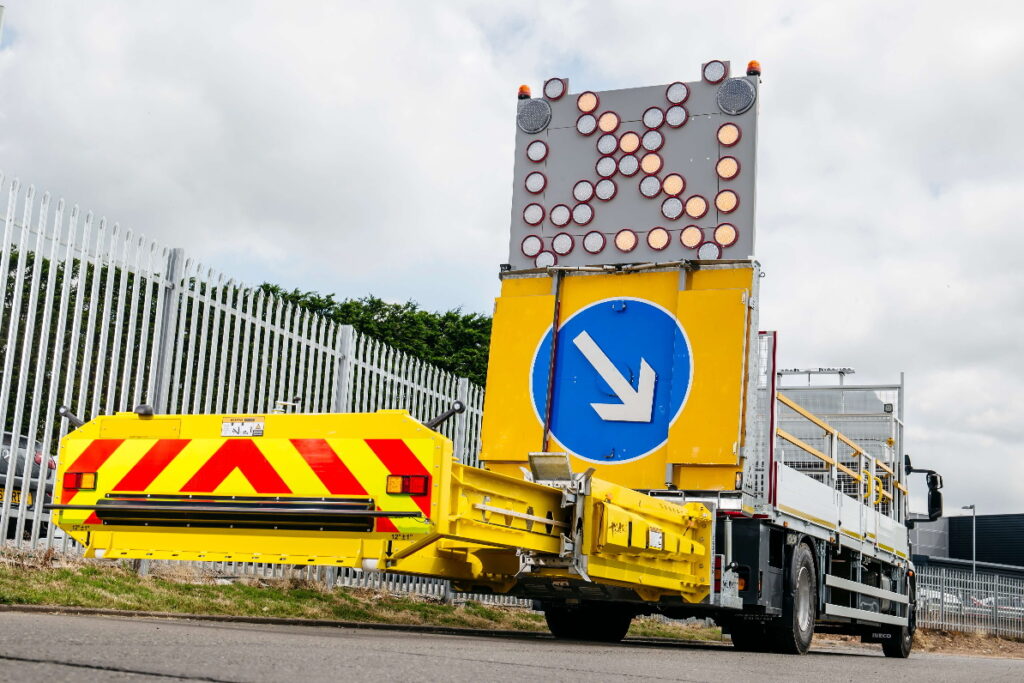
A truck-mounted attenuator typically costs between $30,000 and $120,000, depending on the model, certification level, and included features. Entry-level systems designed for lighter-duty applications sit at the lower end, while fully certified, accessory-equipped units for highway work zones command significantly higher prices. The sections below break down every factor that shapes that range.
What factors affect the price of a truck-mounted attenuator?
The price of a truck-mounted attenuator is driven by its crash test certification, energy absorption capacity, construction materials, and the accessories integrated into the unit. A basic, lower-rated TMA built for lighter vehicles costs far less than a heavy-duty system certified to current MASH standards and fitted with arrow boards or variable message signs.
The most important pricing factors include:
- Certification standard: Systems tested to MASH 2016 involve more rigorous engineering and testing processes than older NCHRP 350 units, which is reflected in the price.
- Vehicle weight rating: TMAs are rated for specific host vehicle weights (for example, 70K or 100K pounds). Higher-rated systems use heavier-duty components and cost more.
- Integrated accessories: LED arrow boards, hydraulic lift masts, and full-color VMS displays each add cost but also expand the operational capability of the unit.
- Hydraulic vs. manual operation: Hydraulically operated systems offer faster deployment and greater operator safety but increase the base price.
- Build quality and materials: Corrosion-resistant materials and robust structural steel extend service life but raise upfront costs.
Geography and import logistics also play a role. If you are sourcing a TMA internationally, freight, customs duties, and local compliance requirements can add a meaningful amount to the final landed cost.
What is the price range for a truck-mounted attenuator?
Truck-mounted attenuators generally range from around $30,000 to $120,000. Lighter-duty or older-standard models sit toward the lower end of that range, while current MASH-certified systems with integrated accessories typically fall between $60,000 and $120,000. The specific configuration you need will determine where in that range your investment lands.
As a rough guide:
- Basic, lower-rated TMAs: $30,000 to $55,000, suitable for lower-speed environments and lighter host vehicles
- Mid-range MASH-certified systems: $55,000 to $85,000, standard highway work zone protection with core features
- High-spec systems with accessories: $85,000 to $120,000 or more, full LED arrow boards, VMS, hydraulic lifts, and advanced connectivity
Keep in mind that these figures reflect the attenuator unit itself. The host truck, installation, and ongoing maintenance are separate costs covered further below.
Is leasing a truck-mounted attenuator cheaper than buying?
Leasing a truck-mounted attenuator can be cheaper in the short term, but buying is typically more cost-effective over a multi-year period. Leasing reduces upfront capital outlay and keeps maintenance responsibility with the supplier, making it attractive for contractors with project-based or seasonal demand. Outright ownership makes more financial sense for organizations with continuous, long-term deployment needs.
When leasing makes practical sense:
- You have a single large project with a defined end date
- Your organization does not have the budget for a large capital purchase
- You want to avoid the administrative burden of compliance, maintenance, and storage
- You need a TMA quickly without a lengthy procurement process
When buying is the smarter move:
- You deploy TMAs continuously across multiple projects or sites
- You want full control over equipment specification and readiness
- You are building a long-term fleet for a highway contractor or municipal department
A common rule of thumb in the industry is that if you expect to use a TMA for more than two to three years, purchasing outright delivers better value than accumulated lease payments.
What additional costs come with owning a truck-mounted attenuator?
Beyond the purchase price, owning a truck-mounted attenuator involves ongoing costs for maintenance, repair after impact, storage, training, and compliance recertification. These costs are real and should be factored into your total cost of ownership before you commit to a purchase.
The main additional costs to plan for include:
- Routine maintenance: Hydraulic systems, electrical components, and structural connections require regular inspection and servicing
- Post-impact repair: TMAs are designed to absorb crash energy, which means they may need partial or full replacement of components after a significant impact
- Host vehicle: The truck itself is a separate cost, and the TMA must be matched to the vehicle’s weight class
- Operator training: Crews need to understand deployment procedures, safety protocols, and equipment checks
- Storage and transport: When not in use, TMAs need appropriate storage to prevent damage and maintain certification compliance
Planning for these costs upfront prevents budget surprises and keeps your equipment operationally ready when you need it most.
Does MASH certification affect how much a TMA costs?
Yes, MASH certification directly increases the cost of a truck-mounted attenuator. Systems tested and accepted under MASH 2016 (the current standard) require more rigorous engineering, more extensive crash testing, and stricter documentation than older standards like NCHRP 350. That investment in compliance is built into the unit price.
MASH, which stands for Manual for Assessing Safety Hardware, sets the benchmark for how roadside safety devices are tested in the United States and increasingly in international markets. A TMA with a current FHWA acceptance letter under MASH 2016 gives you confidence that the system has been validated against the most demanding real-world impact scenarios.
For government contracts and federally funded highway projects, MASH certification is often a contractual requirement rather than a choice. Purchasing a non-certified or older-standard TMA to save money upfront can disqualify you from those projects entirely, making the apparent saving a liability.
The cost premium for MASH-certified systems is typically in the range of 15 to 30 percent over comparable non-certified units, but the compliance assurance and project eligibility that comes with it represent significant practical value.
When does it make financial sense to invest in a higher-spec TMA?
Investing in a higher-spec truck-mounted attenuator makes financial sense when your work involves high-speed highways, frequent deployments, or contracts that require current MASH certification. The higher upfront cost is offset by greater durability, broader project eligibility, and stronger protection for your workers and equipment.
Consider a higher-spec system if:
- You operate on high-speed roads (above 55 mph) where impact forces are significantly greater
- Your contracts are publicly funded and require MASH 2016 compliance
- You want integrated arrow boards or VMS to reduce the number of separate units you need to manage on site
- Your TMA will be deployed frequently and needs to withstand heavy operational use over many years
- You are building a fleet and want consistent, interchangeable equipment across multiple trucks
A lower-spec TMA may look attractive on paper, but if it limits the contracts you can bid on or requires more frequent replacement, the total cost over five years can easily exceed that of a better-specified unit purchased once.
How Verdegro Helps with Truck-Mounted Attenuator Selection
We manufacture a range of truck-mounted attenuator systems designed for road construction contractors and traffic management operators who need certified, durable crash protection. Our TMA lineup includes the TMA-US 100K, TTMA-US 100K, LTMA-US 70K, and BLADE TMA, each tested to NCHRP 350 TL-3 or MASH 2016 standards and backed by FHWA acceptance letters.
Here is what sets our systems apart:
- Multiple weight class options: Our range covers both 70K and 100K pound host vehicle ratings, so you can match the TMA to your existing fleet
- Integrated accessories: LED arrow boards, full-color VMS displays, and hydraulic LED lift masts are available as add-ons, reducing the number of separate units you need on site
- Current MASH 2016 certification: Our systems hold FHWA acceptance letters under the most current standard, keeping you compliant on federally funded projects
- Mobilityplanner platform: Our online platform gives you real-time status updates, GPS tracking, and remote control capabilities for your deployed equipment
- Built for long-term use: Our systems are engineered for durability in demanding work zone environments, reducing long-term replacement and maintenance costs
If you want to discuss which system fits your application and budget, contact our team and we will help you find the right solution.
Related Articles
- What is a wings add-on used for on a truck mounted attenuator?
- What is the average lifespan of a truck mounted attenuator?
- When is a light truck mounted attenuator sufficient instead of a full truck mounted attenuator?
- What is the difference between the Blade and Armadillo truck mounted attenuator?
- What is a trailer truck mounted attenuator?