
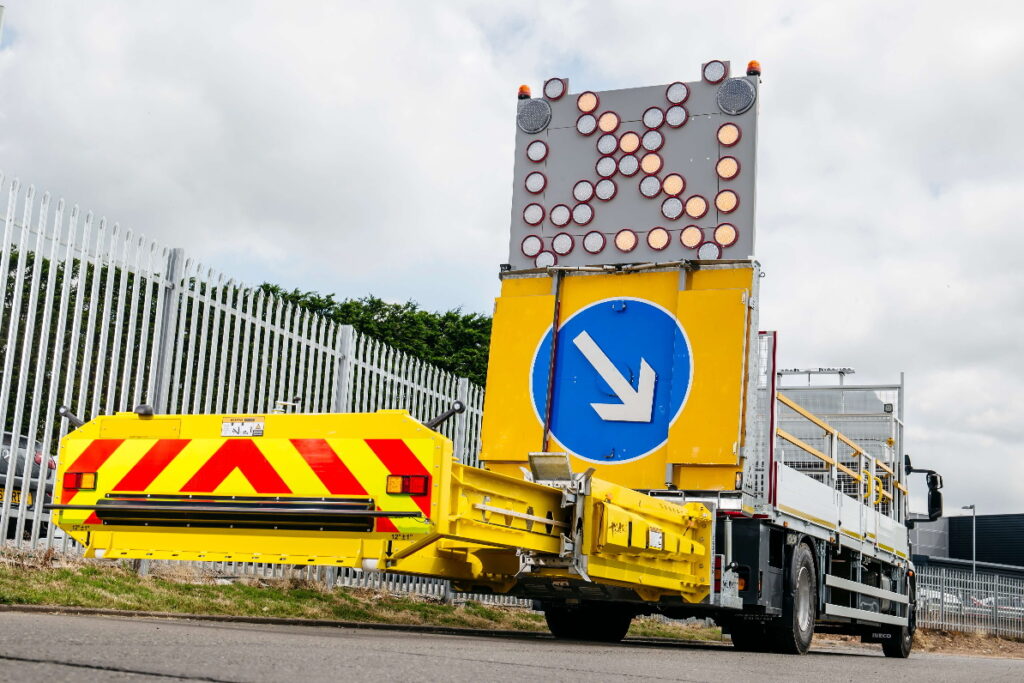
TL-3 is a test level in crash testing standards that defines the impact conditions a safety device must survive to be approved for use on high-speed roads. For truck-mounted attenuators, TL-3 represents the most widely required certification level in the United States and internationally, covering impact speeds up to 100 km/h (62 mph). The sections below unpack how TL-3 compares to other test levels, what the testing process involves, and which standards apply to your project.
How does TL-3 differ from TL-2 and TL-4 in crash testing?
TL-3 sits in the middle of the test level spectrum, designed for high-speed roadways where traffic regularly travels above 70 km/h. TL-2 covers lower-speed environments such as urban streets and secondary roads, with impact speeds typically up to 70 km/h. TL-4 and above address heavier vehicles and higher impact energies, and are generally required for permanent barrier systems rather than mobile attenuators.
For work zones on highways and motorways, TL-3 is the standard most agencies mandate. It strikes a balance between realistic crash scenarios on high-speed roads and the practical constraints of mobile, truck-mounted equipment. A TL-2-rated attenuator would not meet the safety requirements for a 100 km/h motorway work zone, while TL-4 is typically reserved for fixed infrastructure rather than deployable crash cushion systems.
The key distinction between levels is not just speed but also the vehicle mass and angle of impact used in testing. Each level tests a progressively more severe scenario, and the device must manage occupant risk within defined limits to pass.
What vehicles and speeds are used in a TL-3 crash test?
A TL-3 crash test uses two primary vehicle types: a small car weighing approximately 900 kg and a larger pickup truck weighing approximately 2,000 kg, both impacting at 100 km/h. Tests are conducted at multiple angles to simulate real-world scenarios, including direct rear-end impacts and angled collisions that reflect how a distracted or out-of-control driver might strike a work zone vehicle.
The testing protocol evaluates several outcomes simultaneously:
- Occupant risk criteria – measured forces on crash test dummies inside the impacting vehicle must stay within survivable limits
- Structural performance – the attenuator must absorb and redirect impact energy without causing the host truck to move dangerously
- Exit conditions – the impacting vehicle must not penetrate the work zone or roll over in a way that endangers workers
Both the small car test and the pickup truck test must be passed for a device to receive TL-3 certification. Passing only one scenario is not sufficient. This dual-vehicle requirement reflects the wide range of vehicles found on modern highways.
What is the difference between MASH and NCHRP 350 for TL-3 TMAs?
MASH (Manual for Assessing Safety Hardware) and NCHRP 350 are two successive generations of crash testing standards in the United States, both of which include TL-3 requirements, but MASH uses updated vehicle weights and stricter evaluation criteria. NCHRP 350 was the dominant standard for many years before MASH replaced it as the current benchmark for new device approvals.
The practical differences between the two matter when you are specifying equipment for a project:
- Vehicle mass: MASH uses heavier test vehicles than NCHRP 350, reflecting the actual increase in average vehicle weight on today’s roads
- Occupant risk metrics: MASH introduced updated injury criteria that are more aligned with current biomechanical research
- Acceptance status: Many state and federal agencies in the US now require MASH-compliant devices for new projects, while NCHRP 350-approved products may still be accepted on certain existing contracts
If you are working on a federally funded highway project in the US in 2026, MASH 2016 is the current applicable standard. NCHRP 350 approvals remain valid for equipment already in use, but new purchases are increasingly expected to carry MASH acceptance letters from the FHWA.
Does a TL-3 rating guarantee compliance on all road projects?
No, a TL-3 rating does not automatically guarantee compliance on every project. Whether a TL-3-certified truck-mounted attenuator meets your project’s requirements depends on the specific standard under which it was tested, the jurisdiction’s current acceptance criteria, and any additional conditions set by the project owner or highway authority.
Several factors can affect compliance even when a device holds TL-3 certification:
- Standard version: A device tested under NCHRP 350 TL-3 may not satisfy a project requiring MASH TL-3
- Host vehicle requirements: TMA approvals are often tied to specific host vehicle weight ranges; using the device on a truck outside that range can void the approval
- Local regulations: Some countries or regions have their own acceptance processes on top of US-based certifications
- Project specifications: Government contracts and design-build projects frequently specify the exact standard and test level required in the tender documents
Always verify the acceptance documentation for the specific device you intend to deploy against the requirements in your project specifications before procurement.
Which truck-mounted attenuators have TL-3 certification under MASH?
Several truck-mounted attenuators on the market hold TL-3 certification, but the number with MASH 2016 acceptance letters from the FHWA is more limited than those approved under the older NCHRP 350 standard. Devices with current MASH acceptance represent the most up-to-date compliance available for new highway projects in the US.
When evaluating a TMA for TL-3 compliance, look for:
- An FHWA acceptance letter that explicitly references MASH 2016 TL-3
- Documentation specifying the host vehicle weight range for which the approval applies
- Test reports from an accredited crash testing facility
How Verdegro Supports TL-3 Compliance for Your Work Zone
We manufacture a range of truck-mounted attenuators tested and approved to both NCHRP 350 TL-3 and MASH 2016, giving you documented compliance options for a wide range of project types. Our TMA lineup includes:
- TMA-US 100K – tested and approved under MASH 2016 TL-3 for standard highway work zones
- TTMA-US 100K – a towable variant offering flexible deployment without a dedicated host truck
- LTMA-US 70K – designed for lighter host vehicles while maintaining TL-3 crash performance
- BLADE TMA – a compact, high-performance option for contractors needing a lower-profile system
Each system comes with full documentation, including FHWA acceptance letters, so you can present the correct compliance paperwork at tender stage without uncertainty. Optional accessories such as LED arrow boards, full-color VMS displays, and hydraulic LED-lift masts can be integrated directly into the system, reducing the number of separate units you need to manage on site.
If you are specifying a TMA for an upcoming project and need clarity on which certification applies to your situation, contact us and we will help you match the right system to your project requirements.
Related Articles
- When is a light truck mounted attenuator sufficient instead of a full truck mounted attenuator?
- What is the difference between the Blade and Armadillo truck mounted attenuator?
- What is CEN/TS 16786 for truck mounted attenuators?
- What is the difference between a truck mounted attenuator and a trailer truck mounted attenuator?
- Should you choose a truck-mounted or trailer-mounted attenuator?