
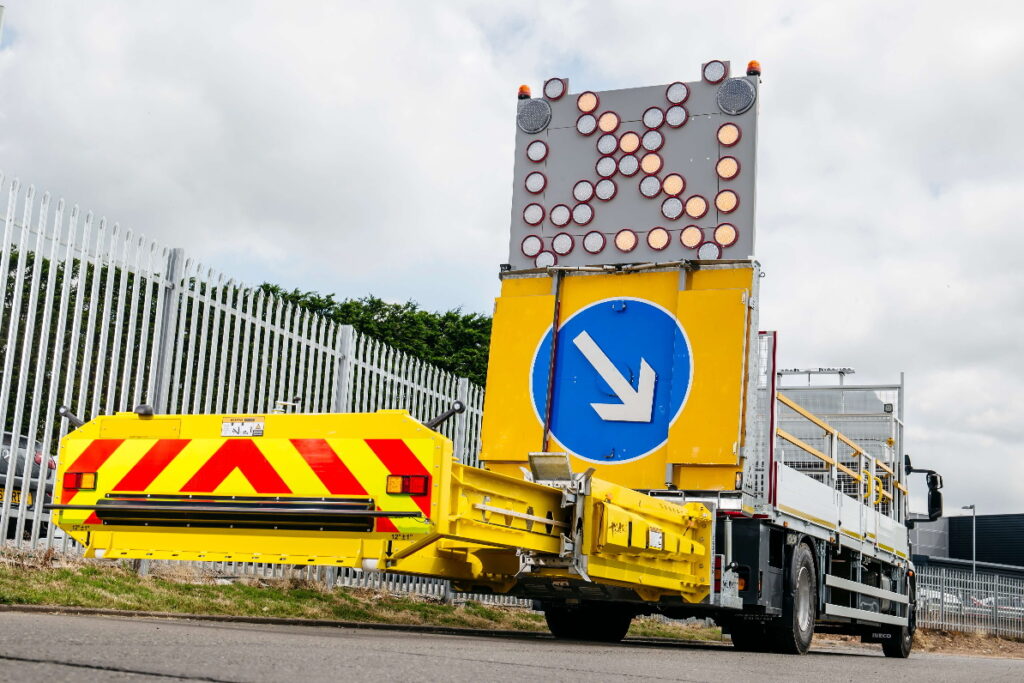
After hitting a truck-mounted attenuator, you should pull over safely if your vehicle is still drivable, check yourself and any passengers for injuries, and call emergency services immediately. Do not leave the scene. A TMA collision is a serious road event, and the steps you take in the first few minutes directly affect your safety, legal standing, and the safety of the workers in the work zone ahead.
Truck-mounted attenuators are designed to absorb the energy of a rear-end collision and protect both the driver and road workers. That protective function means the device takes the force of the impact, but your vehicle and your body still experience significant stress. The sections below walk through what to do next, who bears responsibility, and how to handle reporting.
Is it safe to drive after hitting a truck-mounted attenuator?
In most cases, you should not drive your vehicle after hitting a truck-mounted attenuator until it has been inspected. Even if the car appears functional, the collision may have caused structural damage, compromised the steering or braking system, or triggered airbag deployment. Driving a damaged vehicle creates additional risk for you and other road users.
If your vehicle is blocking traffic and emergency services have not yet arrived, you may need to move it to the shoulder to prevent a secondary collision. In that situation, move it only as far as necessary and stop immediately. If the vehicle is immobile or you are injured, stay inside with your seatbelt on until help arrives, unless there is an immediate fire or safety hazard.
Even minor-looking impacts can affect safety systems. Airbags, crumple zones, and suspension components may be compromised in ways that are not visible from the outside. A qualified mechanic or roadside assistance service should assess the vehicle before you continue driving.
What are the immediate steps to take at the scene?
After hitting a TMA, the immediate priority is personal safety and preventing further incidents. Move to a safe location if possible, activate your hazard lights, call emergency services, and do not re-enter the roadway. If you are on a highway, stay away from live traffic lanes while you wait for help.
Follow these steps in order:
- Check for injuries in yourself and any passengers before doing anything else.
- Call emergency services (911 in the US or your local emergency number) even if injuries appear minor.
- Activate hazard lights immediately to alert approaching drivers.
- Stay at the scene, leaving after a collision is a legal offense in most jurisdictions.
- Do not approach the work zone ahead of the TMA truck, as active road work may still be ongoing.
- Document the scene by taking photos of your vehicle, the TMA, the road conditions, and any visible damage.
- Exchange information with the TMA truck operator, including their employer’s contact details and vehicle registration.
Do not move the vehicles more than necessary before police arrive, as the scene may need to be documented for the official accident report.
Who is responsible when a driver hits a TMA?
In the majority of cases, the driver who rear-ends a truck-mounted attenuator bears legal responsibility for the collision. TMAs are positioned at the rear of slow-moving or stationary work zone trucks specifically because rear-end impacts are the most common type of work zone crash. Traffic law in most jurisdictions requires drivers to maintain safe following distances and reduce speed in active work zones.
That said, liability is not always straightforward. Factors that may shift or share responsibility include:
- Inadequate signage or warning systems in the work zone that failed to alert drivers to the hazard ahead
- Improper positioning of the TMA truck, such as being placed in a way that was not clearly visible
- Mechanical failure of the attenuator itself, which may involve the manufacturer or maintenance contractor
- Road conditions such as ice, standing water, or poor visibility that were not adequately addressed
Insurance companies and legal investigators will examine the full circumstances of the collision. If you believe the work zone setup contributed to the incident, document everything at the scene and consult a legal professional before making statements to insurers.
What happens to the truck-mounted attenuator after a collision?
After a collision, a truck-mounted attenuator must be taken out of service and inspected before it can be redeployed. TMAs are engineered as sacrificial safety devices, meaning they are designed to deform and absorb impact energy in place of the work truck and its occupants. A single significant impact can render the unit non-functional.
The inspection and replacement process typically involves:
- Removing the damaged TMA from the host vehicle
- Assessing whether the cartridge or core components can be replaced or whether the entire unit must be retired
- Checking the truck’s rear mounting structure for damage before fitting a replacement
- Recertifying the replacement unit meets the applicable crash test standard before returning to service
Modern TMA systems are built with this in mind. Units tested to MASH 2016 standards, the most current crash test protocol, are designed to perform predictably under defined impact conditions. After a qualifying impact, the attenuator has done its job and must be replaced rather than reused.
How should the incident be reported after hitting a TMA?
After a TMA collision, you must file a police report at the scene or at the nearest station, notify your insurance provider as soon as possible, and report the incident to your employer if you were driving a company vehicle. In some jurisdictions, work zone collisions trigger additional reporting obligations for the road authority or contractor managing the site.
When reporting, include the following information:
- Date, time, and exact location of the collision
- Name and contact details of the TMA truck operator and their employer
- The registration number and description of the TMA vehicle
- Photos of the scene, vehicle damage, and the attenuator
- Names and contact details of any witnesses
- A description of road conditions, signage, and visibility at the time
Keep copies of all documentation, including your police report number, insurance claim reference, and any correspondence with the work zone contractor. If injuries occurred, seek medical attention promptly and retain all medical records, as these may be relevant to any subsequent insurance or legal process.
How Verdegro Supports Work Zone Safety with TMA Systems
We design and manufacture truck-mounted attenuators built to perform in real-world collision scenarios. Our TMA range includes the TMA-US 100K, TTMA-US 100K, LTMA-US 70K, and BLADE TMA, all tested and approved to recognized crash safety standards including MASH 2016 and NCHRP-350 TL-3. These systems are engineered to absorb impact energy and protect both road workers and drivers in active work zones.
Our crash protection systems offer more than just the attenuator itself. Each unit can be configured with optional accessories to improve work zone visibility and communication:
- LED arrow boards to guide traffic away from the work area
- Full-color VMS displays for dynamic messaging to approaching drivers
- Hydraulic LED-lift masts for elevated visibility in low-light conditions
We hold multiple FHWA acceptance letters under MASH 16, reflecting our commitment to meeting the highest current compliance standards. Whether you are a highway contractor, a municipal transportation department, or a civil engineering firm managing active road work, our systems are built to meet your safety and compliance requirements.
If you want to learn more about the right TMA solution for your operation, contact us directly and we will help you find the configuration that fits your work zone setup.