
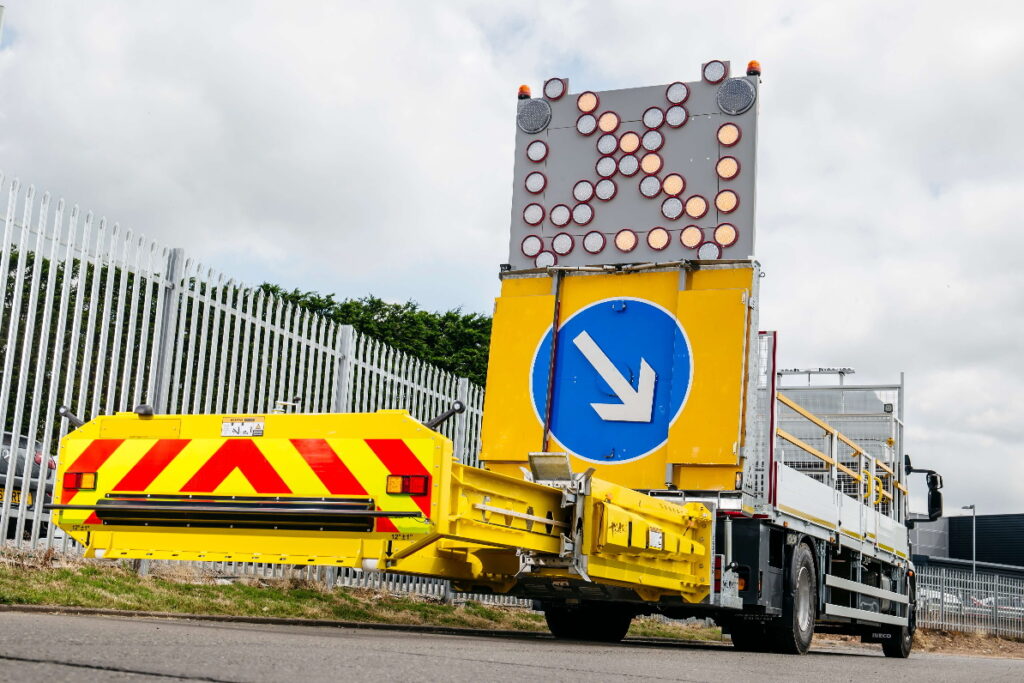
Before buying a truck mounted attenuator, you need to evaluate compliance ratings, host truck compatibility, total ownership costs, and supplier certifications. The right TMA must meet the crash test standard required in your operating region, fit the gross vehicle weight rating of your host truck, and come with documentation that holds up to regulatory scrutiny. The sections below walk through each of these decisions in practical detail.
What MASH compliance rating does a truck mounted attenuator need?
In most active work zone applications in the United States, a truck mounted attenuator must meet MASH 2016 (Manual for Assessing Safety Hardware) requirements, which replaced the older NCHRP-350 standard. MASH 2016 sets more rigorous crash test conditions and is now required on federally funded projects. If you operate in other countries, the applicable standard may differ, but MASH 2016 is increasingly recognized internationally as the benchmark.
The most common test level for TMAs is Test Level 3 (TL-3), which covers impacts from passenger vehicles at highway speeds. This is the minimum level most highway authorities accept for work zone protection. Some high-speed or high-risk environments may require higher test levels, so always confirm the specific requirement with the relevant road authority before purchasing.
One practical point: FHWA acceptance letters confirm that a TMA has passed the required crash tests and is eligible for use on federally funded projects. Always ask a supplier for their current acceptance letters and verify the test level they cover.
What is the difference between a shadow truck and a truck mounted attenuator?
A shadow truck is the host vehicle itself, the truck that travels ahead of or behind a work crew to provide a physical buffer between traffic and workers. A truck mounted attenuator (TMA) is the crash cushion device bolted to the rear of that shadow truck. The two terms are often used interchangeably in conversation, but they describe different things: one is the vehicle, the other is the safety device mounted on it.
The TMA is what absorbs and redirects the energy of an errant vehicle striking the rear of the shadow truck. Without a certified TMA, the shadow truck itself offers limited protection because a direct collision transfers the full impact force into the vehicle and anyone nearby. The TMA is engineered to deform in a controlled way, reducing the deceleration force experienced by the occupants of the striking vehicle and limiting the movement of the host truck.
In practice, you need both: a properly specified shadow truck and a certified TMA mounted to it. Neither alone provides the level of protection that a tested, compliant combination delivers.
What host truck specifications are required for a TMA?
Every TMA is tested and certified for a specific range of host truck gross vehicle weight ratings (GVWR). Using a TMA on a truck that falls outside that weight range invalidates the crash test certification and may compromise the protective performance of the system. Before purchasing, confirm the GVWR range the TMA is approved for and match it to your fleet.
Beyond weight, you also need to consider:
- Mounting interface: The rear frame or hitch receiver of the host truck must be compatible with the TMA’s mounting system. Some TMAs require a specific receiver class or custom mounting plate.
- Hydraulic or electrical connections: If the TMA includes a hydraulic lift mast, arrow board, or VMS display, the host truck must supply the appropriate power take-off (PTO) or electrical output.
- Rear overhang and clearance: The TMA adds length and weight to the rear of the truck. Check that the configuration stays within legal road transport dimensions for your jurisdiction.
- Payload capacity: The TMA’s own weight reduces the available payload of the host truck, which affects what additional equipment you can carry.
Always request the host truck specification sheet from your TMA supplier before finalizing a purchase. Fitting an attenuator to an incompatible truck is a compliance and safety risk.
What are the total costs of owning a truck mounted attenuator?
The purchase price of a TMA is only one part of the total cost of ownership. To budget accurately, you need to account for the full life cycle of the equipment, not just the upfront invoice.
Key cost categories to factor in include:
- Purchase price: Varies significantly based on test level, accessories (arrow board, VMS, hydraulic lift), and build quality.
- Host truck: If you do not already own a compatible shadow truck, this is a major additional capital cost.
- Installation and commissioning: Mounting, wiring, and initial setup may require specialist labor.
- Maintenance and inspections: TMAs require regular checks and periodic recertification after any impact event. Post-crash repairs can be substantial.
- Replacement parts: Crash cushion components are consumable by design. Availability and cost of spare parts from the supplier matter over the long term.
- Compliance updates: If standards change or your operating region updates its requirements, older equipment may need modification or replacement.
A lower purchase price can easily be offset by higher maintenance costs, poor parts availability, or a shorter service life. Evaluate total cost over a realistic operational period of five to ten years.
Should you buy or rent a truck mounted attenuator?
Buying a truck mounted attenuator makes more financial sense when you have consistent, ongoing deployment needs. If your organization runs regular road maintenance or construction projects throughout the year, ownership gives you control over availability, configuration, and long-term cost per deployment day. Renting becomes more practical for short-term projects, one-off contracts, or when you need a specific test level or configuration you do not currently own.
Consider buying when:
- You deploy TMAs for more than a few months per year
- You want to customize the unit with specific accessories like arrow boards or VMS displays
- You need guaranteed availability without depending on rental fleet stock
- Your contracts require documented ownership of compliant equipment
Consider renting when:
- You have a single short-duration project
- You are entering a new market and want to test operational fit before committing capital
- Your host truck fleet is not yet configured for TMA mounting
For organizations that operate at scale, owning your own TMA systems typically delivers better value and operational reliability over time.
What certifications and documentation should a TMA supplier provide?
A reputable TMA supplier should provide complete documentation before and after the sale. At minimum, you should receive FHWA acceptance letters confirming the specific model has been tested to the applicable standard (MASH 2016 TL-3 or higher), along with the full crash test report reference. Without these documents, you cannot verify compliance for federally funded projects.
Additional documentation to request includes:
- Host truck compatibility specifications: The GVWR range and mounting requirements the TMA is certified for
- Installation manual: Detailed instructions for mounting, wiring, and commissioning
- Maintenance schedule: Inspection intervals, service requirements, and post-impact procedures
- Parts list and availability confirmation: Confirmation that replacement crash components are stocked or available within a reasonable lead time
- CE marking or equivalent: If you operate in Europe or other regulated markets, confirm which regional certifications apply
Be cautious of suppliers who cannot produce current acceptance letters or who reference outdated test standards. Compliance documentation protects you legally and operationally if an incident occurs on site.
How Verdegro Can Help You Choose the Right TMA
We manufacture a range of truck mounted attenuators tested and approved to NCHRP-350 TL-3 and MASH 2016, including the TMA-US 100K, TTMA-US 100K, LTMA-US 70K, and BLADE TMA. Each model is designed for specific host truck weight classes and operational requirements, so you can match the right system to your fleet without guesswork. We hold multiple FHWA acceptance letters under MASH 2016, the most current standard, which means our documentation is ready for federally funded project requirements.
Here is what working with us looks like in practice:
- We help you match the correct TMA model to your host truck’s GVWR and mounting configuration
- We provide full compliance documentation, including FHWA acceptance letters and crash test references
- Our TMAs are available with optional accessories including LED arrow boards, full-color VMS displays, and hydraulic LED-lift masts, so you can configure a complete shadow truck setup from a single supplier
- We support you with installation guidance, maintenance schedules, and spare parts availability
- Through our Mobilityplanner platform, you can monitor your deployed equipment in real time, including GPS location and operational status
If you are evaluating a purchase and want to confirm which model fits your application, contact our team directly. We will give you a clear, specific answer based on your truck specifications and project requirements.
Related Articles
- Which countries require CEN/TS 16786-certified truck mounted attenuators?
- What is the difference between MASH and CEN/TS 16786 for truck mounted attenuators?
- Which countries require MASH-certified truck mounted attenuators?
- How do you maintain a truck mounted attenuator?
- What is a truck mounted attenuator used for?