
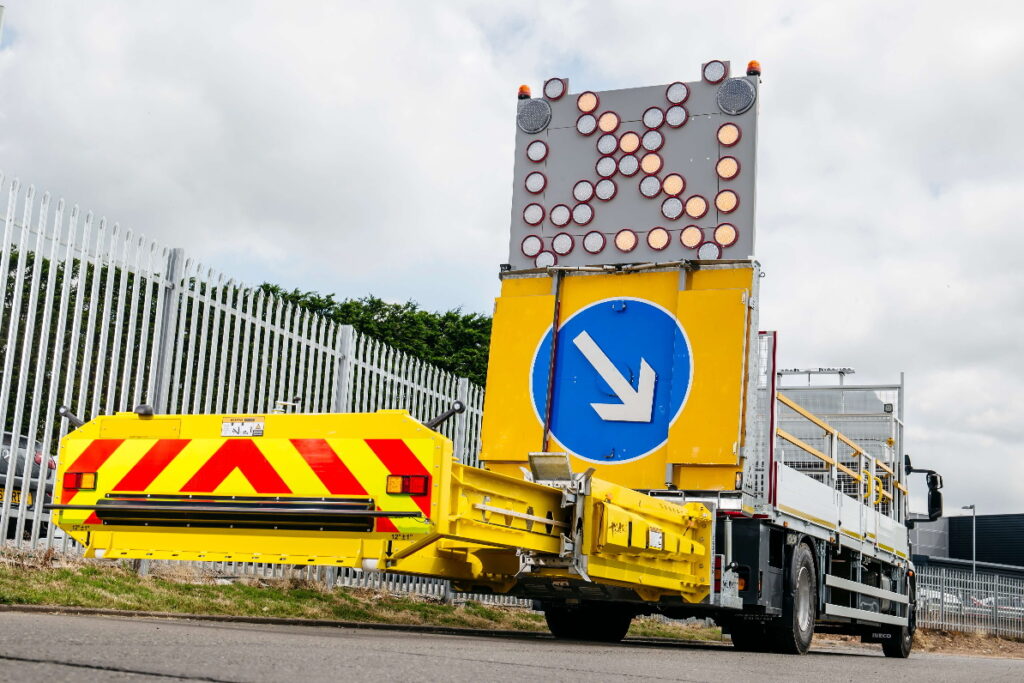
When buying a truck mounted attenuator, the most important features to compare are crash test rating, impact speed category, mounting compatibility, deployment system, and parts availability. These factors directly determine whether a TMA will perform safely in your specific work zone conditions and meet the legal requirements in your region. The sections below walk you through each comparison point in detail.
Which MASH or NCHRP 350 rating should a truck mounted attenuator meet?
A truck mounted attenuator should meet MASH 2016 (Manual for Assessing Safety Hardware) as the current standard for new procurement, particularly for federally funded projects in the United States. NCHRP 350 TL-3 was the previous standard and remains acceptable for existing equipment in many jurisdictions, but MASH 2016 sets stricter test conditions and is increasingly required by state and federal agencies.
The difference between the two standards matters in practice. MASH 2016 uses updated vehicle weights and test speeds that better reflect modern traffic conditions. If you are purchasing new equipment for a long-term fleet, specifying MASH 2016 compliance protects your investment against future regulatory changes and ensures your attenuators remain eligible for use on publicly funded roadways.
Always verify that the TMA holds a current FHWA acceptance letter for the standard it claims. A manufacturer’s claim of compliance is not the same as formal federal acceptance. Ask for documentation before you commit to a purchase.
What impact speed categories do truck mounted attenuators come in?
Truck mounted attenuators are generally rated by Test Level (TL), with TL-2 and TL-3 being the most common categories for work zone applications. TL-2 covers impact speeds up to approximately 70 km/h (44 mph), while TL-3 covers impacts up to 100 km/h (62 mph). The right category depends on the posted speed limit and traffic conditions at your deployment site.
For highway and motorway work zones where traffic moves at high speed, TL-3 is typically the minimum acceptable rating. Lower-speed urban or arterial road projects may permit TL-2 equipment. Using an attenuator rated below the site’s speed category creates a compliance gap and significantly increases risk to both workers and road users.
Some markets outside the United States use equivalent European standards. If you operate internationally, confirm that the TMA meets the applicable regional standard for each country where you deploy it.
How does attenuator mounting type affect performance and compatibility?
The mounting type determines how a TMA connects to the host vehicle, and it directly affects both crash performance and the range of trucks the system can be used with. The two main categories are hitch-mounted and frame-mounted systems. Hitch-mounted units attach to a standard receiver hitch, making them easier to transfer between vehicles. Frame-mounted systems bolt directly to the truck chassis, offering a more rigid connection that can support heavier-duty crash ratings.
Compatibility is a practical concern that buyers sometimes overlook. A TMA designed for a specific truck weight class may not perform as rated when mounted to a lighter or heavier vehicle. Always match the attenuator’s minimum host vehicle weight requirement to your actual fleet. Mounting a TMA to an undersized truck reduces the system’s ability to absorb and redirect crash energy effectively.
If your fleet includes multiple vehicle types, look for attenuators with flexible mounting options or adapter kits that allow use across different chassis configurations without compromising the crash-test certification.
What safety features distinguish high-quality TMAs from basic models?
High-quality truck mounted attenuators go beyond the crash cushion itself to include features that improve visibility, operator safety, and situational awareness. The most important distinguishing features include integrated LED arrow boards, Variable Message Sign (VMS) capability, and hydraulic lift masts for elevated lighting. These additions turn a TMA from a passive crash barrier into an active warning system.
Visibility is a primary factor. A TMA that carries a bright, high-visibility arrow board makes the work zone boundary clear to approaching drivers well before they reach the shadow vehicle. Models that support full-color VMS displays allow operators to communicate lane closures, speed reductions, or incident information in real time.
Build quality also separates premium units from basic ones. Look for robust steel construction, corrosion-resistant coatings, and a design that keeps the crash cartridge contained after impact to reduce secondary hazard. Some systems are engineered so the attenuator absorbs energy progressively, reducing deceleration forces on the host vehicle’s occupants during a rear-end collision.
Should you choose a manual or hydraulic TMA deployment system?
A hydraulic deployment system is the better choice for most professional work zone operations because it allows a single operator to raise and lower the attenuator quickly and safely from the cab or a control panel. Manual systems require physical effort and more time to deploy, which increases exposure time for workers during setup and pack-down on live roads.
For lower-frequency deployments or budget-constrained operations, manual systems remain a practical option. They have fewer components that can fail mechanically and typically cost less to purchase and maintain. However, on high-speed roads where setup time directly correlates with worker risk, the speed advantage of a hydraulic system is difficult to justify skipping.
Consider also how often your crews will be moving between sites in a single shift. Frequent repositioning makes hydraulic deployment significantly more efficient over the course of a working day, reducing fatigue and the risk of deployment errors under pressure.
What should you check about TMA serviceability and replacement parts?
Before purchasing any truck mounted attenuator, confirm that replacement crash cartridges and structural components are readily available from the manufacturer or an authorized distributor. After a significant impact, the crash cushion element must be replaced before the unit can be redeployed. If parts have long lead times or require special import, your TMA becomes a liability rather than an asset after any collision.
Also check whether the manufacturer provides clear post-impact inspection criteria. A good TMA system comes with documented guidance on which components need replacement after impacts of different severity. This protects you from either redeploying a compromised unit or unnecessarily scrapping reusable parts.
Service support matters as much as parts availability. Ask whether the manufacturer offers technical support, repair training for your maintenance team, and access to service documentation. Systems with modular designs are generally easier to repair in the field, reducing downtime between deployments.
How Verdegro Helps with Truck Mounted Attenuators
We manufacture a range of truck mounted attenuator systems tested and accepted to both NCHRP 350 TL-3 and MASH 2016 standards, including the TMA-US 100K, TTMA-US 100K, LTMA-US 70K, and BLADE TMA. Each system holds a current FHWA acceptance letter, so you can deploy with confidence on federally funded projects.
Our attenuators are designed with the practical needs of road construction contractors and traffic management operators in mind. Here is what sets our systems apart:
- MASH 2016 and NCHRP 350 TL-3 certification with FHWA acceptance documentation available on request
- Optional LED arrow boards, full-color VMS displays, and hydraulic LED-lift masts to build a complete shadow vehicle solution
- Modular design that simplifies post-impact replacement and reduces fleet downtime
- Compatible with a range of host vehicle configurations to fit your existing fleet
- MobilityPlanner integration for real-time GPS tracking and remote status monitoring of deployed units
If you want to compare specifications across our TMA range or discuss which system fits your project requirements, contact our team directly. We will help you match the right attenuator to your vehicle, speed category, and compliance requirements.
Related Articles
- What is the difference between a truck mounted attenuator and a trailer truck mounted attenuator?
- What is the difference between MASH and NCHRP-350 for truck mounted attenuators?
- When should you use a truck mounted attenuator instead of a trailer-mounted one?
- How do you maintain a truck mounted attenuator?
- How does a truck mounted attenuator work?